
Advantages and Application Scenarios of Expanded Metal Mesh
2026-10-13
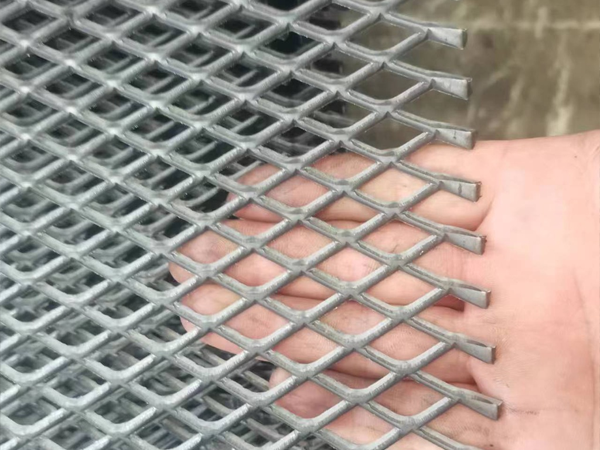
As a widely used engineering material, expanded metal mesh has garnered significant attention due to its unique properties and diverse range of applications. This article explores the advantages of expanded metal mesh and its practical uses across various sectors, offering readers a comprehensive and in-depth understanding.
Expanded metal mesh is created from malleable metal sheets—such as high-quality galvanized steel, copper, aluminum, aluminum alloys, or stainless steel—that are processed using specialized machinery to expand them to two to ten times their original length, resulting in a mesh surface with an open-hole structure. Beyond its inherent physical attributes of high strength and toughness, the unique expansion process unlocks vast potential for a wide array of applications.
First, expanded metal mesh offers remarkable durability. The metal material itself possesses excellent corrosion resistance, wear resistance, and high strength, enabling it to withstand significant pressure and harsh environmental conditions. The specialized expansion process further enhances this durability, ensuring stable performance even in demanding environments. This resilience makes expanded metal mesh an outstanding choice for long-term applications, such as the reinforcement and structural support of buildings.
Second, expanded metal mesh features a robust structure that resists deformation. The mesh exhibits excellent tensile strength and ductility, maintaining structural integrity and stability even under heavy loads. These characteristics make it widely suitable for applications requiring high stability and reliability, such as the manufacturing of aircraft and spacecraft, as well as automotive components like engine filters.
In addition to its physical advantages, expanded metal mesh offers excellent light transmission and airflow. Its open-mesh design allows for the free circulation of air and light, making it an ideal choice for architectural elements requiring ventilation and natural lighting, such as greenhouses and windows. Furthermore, this open structure enables the creation of brighter, more comfortable interior environments in fields like interior design and furniture manufacturing.
The ease of fabrication and installation is another key factor contributing to the widespread use of expanded metal mesh. Metal mesh can be manufactured in various shapes and specifications—through processes such as stamping, weaving, or welding—to meet the requirements of diverse applications. Furthermore, expanded metal mesh is quick and easy to install; it requires no complex welding or fastening procedures, relying instead on simple joining and securing methods. This ease of processing and installation allows for significant savings in labor and time costs across sectors such as machinery manufacturing and foundation pit slope protection.
Expanded metal mesh also excels in terms of environmental sustainability. As a recyclable material, it has a minimal environmental impact during both production and disposal.
Expanded metal mesh is created from malleable metal sheets—such as high-quality galvanized steel, copper, aluminum, aluminum alloys, or stainless steel—that are processed using specialized machinery to expand them to two to ten times their original length, resulting in a mesh surface with an open-hole structure. Beyond its inherent physical attributes of high strength and toughness, the unique expansion process unlocks vast potential for a wide array of applications.
First, expanded metal mesh offers remarkable durability. The metal material itself possesses excellent corrosion resistance, wear resistance, and high strength, enabling it to withstand significant pressure and harsh environmental conditions. The specialized expansion process further enhances this durability, ensuring stable performance even in demanding environments. This resilience makes expanded metal mesh an outstanding choice for long-term applications, such as the reinforcement and structural support of buildings.
Second, expanded metal mesh features a robust structure that resists deformation. The mesh exhibits excellent tensile strength and ductility, maintaining structural integrity and stability even under heavy loads. These characteristics make it widely suitable for applications requiring high stability and reliability, such as the manufacturing of aircraft and spacecraft, as well as automotive components like engine filters.
In addition to its physical advantages, expanded metal mesh offers excellent light transmission and airflow. Its open-mesh design allows for the free circulation of air and light, making it an ideal choice for architectural elements requiring ventilation and natural lighting, such as greenhouses and windows. Furthermore, this open structure enables the creation of brighter, more comfortable interior environments in fields like interior design and furniture manufacturing.
The ease of fabrication and installation is another key factor contributing to the widespread use of expanded metal mesh. Metal mesh can be manufactured in various shapes and specifications—through processes such as stamping, weaving, or welding—to meet the requirements of diverse applications. Furthermore, expanded metal mesh is quick and easy to install; it requires no complex welding or fastening procedures, relying instead on simple joining and securing methods. This ease of processing and installation allows for significant savings in labor and time costs across sectors such as machinery manufacturing and foundation pit slope protection.
Expanded metal mesh also excels in terms of environmental sustainability. As a recyclable material, it has a minimal environmental impact during both production and disposal.
 If the wire diameter of a stainless steel rope mesh is reduced, by how much will its impact resistance and load-bearing capacity decrease?
  Why Stainless Steel Mining Screens Rust and How to Treat Them After Rusting
  Gabion protection technology
  What factors should be considered when selecting zinc-steel fencing?
  What are the anti-corrosion processes for framed wire mesh fencing?
  Why are bent-profile guardrails the preferred choice for municipal and industrial park perimeter protection?
  Detailed Procedure for Installing External Wall Insulation Mesh
  What role does hot-dip galvanizing technology play in guardrail products?
  When it comes to balcony safety, it is worth learning more about stainless steel cable mesh fall-prevention netting.
  Understanding the Multifaceted Engineering Value of Stainless Steel Rope Mesh
  How to determine whether manufactured welded wire mesh meets quality standards
  Why is mesh used for wall plastering?
  Four simple steps to teach you how to install wall corner protectors
  How to make the mesh fabric adhere more firmly during external wall insulation?
  4 Practical Tips for Buying Fiberglass Mesh
  How to Choose Chain-Link Mesh
  Five Key Reasons to Choose Stainless Steel Rope Mesh: Reliability and Cost-Effectiveness
  How can gabion mesh be applied in complex terrain?
  How much do you know about the tensile strength and elongation of Gabion mesh?
  How to distinguish the quality of fiberglass mesh?