
How much do you know about the tensile strength and elongation of Gabion mesh?
2026-08-24
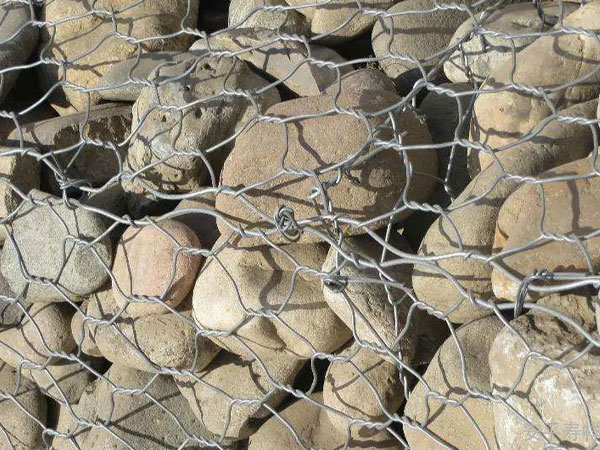
The inspection standards for Gabion mesh are categorized as follows:
1. Tensile strength: 350–575 N/mm², complying with the South African SANS 675:1997 standard.
2. Wire diameter tolerance: A variation of ±5% is within the normal range. Mesh opening tolerance: A variation of -4% to +16% is considered acceptable.
3. Elongation: ≥10%, complying with the European EN 10223-3 standard (based on a test sample length of ≥25 cm).
4. Zinc coating standard: Tested by winding the wire around a mandrel (six times the wire diameter) four consecutive times; complies with SANS 675:1997 (no zinc flaking, cracking, or peeling).
5. Ductility/Flexibility: During testing, the wire is twisted around another wire at a speed of 15 turns per minute, then twisted in the opposite direction at the same speed; the zinc coating and the base wire must not fracture. Complies with SANS 675:1997. Gabion meshes are connected using lacing wire; all lacing wire is either heavily galvanized or stainless steel and is installed using specialized tools (or simple tools). Standard lacing wire diameter is 3 mm, with a tensile strength of 156–178 kg/mm².
Gabion mesh salt spray and tensile strength tests:
When the Gabion mesh is immersed in 30% hydrochloric acid for 10 days, the PVC coating must show no discoloration or cracking to be considered a high-quality product.
Raw material galvanized wire test reports demonstrate:
1. The structural integrity of the Gabion mesh remains intact even if a single wire strand breaks.
2. When tensile force is applied to a 1-meter-wide Gabion mesh along the direction of the weave, the load at which the first wire strand breaks is defined as the failure load; for a mesh panel with 60 mm openings woven from 2.2 mm wire, the failure load is 4,700 kg/m.
Compressive strength test results demonstrate:
1. The compressive strength of a 1 m³ Gabion unit is 400–500 t/m². The service life of PVC-coated, hot-dip Galfan (Zn-Al alloy) low-carbon steel wire can reach up to 70 years. 2. The wire diameter is determined based on the mesh size. The wire material complies with the GB/T700-1988 standard, and its mechanical properties meet the GB/T343-1994 standard. For PVC-coated gabion mesh, the tensile strength is no less than 25 MPa, and the elongation at break is no less than 180%.
1. Tensile strength: 350–575 N/mm², complying with the South African SANS 675:1997 standard.
2. Wire diameter tolerance: A variation of ±5% is within the normal range. Mesh opening tolerance: A variation of -4% to +16% is considered acceptable.
3. Elongation: ≥10%, complying with the European EN 10223-3 standard (based on a test sample length of ≥25 cm).
4. Zinc coating standard: Tested by winding the wire around a mandrel (six times the wire diameter) four consecutive times; complies with SANS 675:1997 (no zinc flaking, cracking, or peeling).
5. Ductility/Flexibility: During testing, the wire is twisted around another wire at a speed of 15 turns per minute, then twisted in the opposite direction at the same speed; the zinc coating and the base wire must not fracture. Complies with SANS 675:1997. Gabion meshes are connected using lacing wire; all lacing wire is either heavily galvanized or stainless steel and is installed using specialized tools (or simple tools). Standard lacing wire diameter is 3 mm, with a tensile strength of 156–178 kg/mm².
Gabion mesh salt spray and tensile strength tests:
When the Gabion mesh is immersed in 30% hydrochloric acid for 10 days, the PVC coating must show no discoloration or cracking to be considered a high-quality product.
Raw material galvanized wire test reports demonstrate:
1. The structural integrity of the Gabion mesh remains intact even if a single wire strand breaks.
2. When tensile force is applied to a 1-meter-wide Gabion mesh along the direction of the weave, the load at which the first wire strand breaks is defined as the failure load; for a mesh panel with 60 mm openings woven from 2.2 mm wire, the failure load is 4,700 kg/m.
Compressive strength test results demonstrate:
1. The compressive strength of a 1 m³ Gabion unit is 400–500 t/m². The service life of PVC-coated, hot-dip Galfan (Zn-Al alloy) low-carbon steel wire can reach up to 70 years. 2. The wire diameter is determined based on the mesh size. The wire material complies with the GB/T700-1988 standard, and its mechanical properties meet the GB/T343-1994 standard. For PVC-coated gabion mesh, the tensile strength is no less than 25 MPa, and the elongation at break is no less than 180%.
 If the wire diameter of a stainless steel rope mesh is reduced, by how much will its impact resistance and load-bearing capacity decrease?
  Advantages and Application Scenarios of Expanded Metal Mesh
  Why Stainless Steel Mining Screens Rust and How to Treat Them After Rusting
  Gabion protection technology
  What factors should be considered when selecting zinc-steel fencing?
  What are the anti-corrosion processes for framed wire mesh fencing?
  Why are bent-profile guardrails the preferred choice for municipal and industrial park perimeter protection?
  Detailed Procedure for Installing External Wall Insulation Mesh
  What role does hot-dip galvanizing technology play in guardrail products?
  When it comes to balcony safety, it is worth learning more about stainless steel cable mesh fall-prevention netting.
  Understanding the Multifaceted Engineering Value of Stainless Steel Rope Mesh
  How to determine whether manufactured welded wire mesh meets quality standards
  Why is mesh used for wall plastering?
  Four simple steps to teach you how to install wall corner protectors
  How to make the mesh fabric adhere more firmly during external wall insulation?
  4 Practical Tips for Buying Fiberglass Mesh
  How to Choose Chain-Link Mesh
  Five Key Reasons to Choose Stainless Steel Rope Mesh: Reliability and Cost-Effectiveness
  How can gabion mesh be applied in complex terrain?
  How to distinguish the quality of fiberglass mesh?