
Why Stainless Steel Mining Screens Rust and How to Treat Them After Rusting
2026-10-12
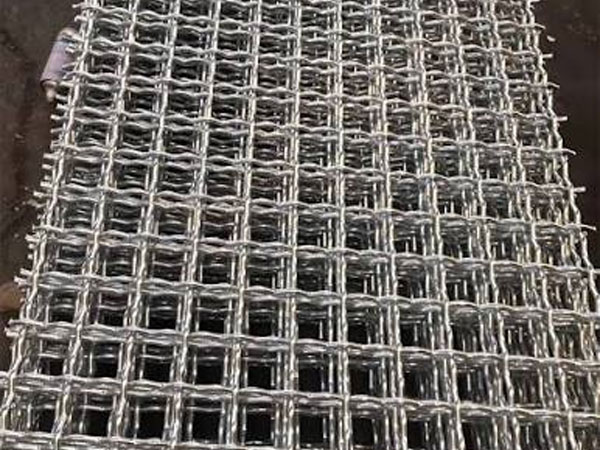
Stainless steel mining screens are metal mesh products used for screening and filtration in industries such as mining, coal, and petroleum. They possess exceptional strength, rigidity, and load-bearing capacity, and do not rust under harsh conditions. However, some users might ask, "How can it be rust-proof? Why has the stainless steel screen I use started to rust?" This issue generally stems from two causes: first, vendors deceiving consumers with inferior products; and second, damage to the passivation layer on the screen's surface.
We know that stainless steel resists rusting primarily due to a dense passivation layer on its surface. If this layer is compromised by scratches or impacts, or if highly corrosive substances—such as hydrogen-containing compounds or iron ions—come into contact with the surface, the passivation layer can be damaged, leading to rust. Rusting can also occur if the screen is left unprotected after installation and sustains damage during the installation of other equipment.
So, how should this problem be addressed?
One solution for rusted screens is to clean the affected area and keep it dry and clean; the passivation layer will naturally regenerate over time. To prevent rusting in the first place, manufacturers must handle the screens carefully during production, as follows:
1. During the transport and handling of raw materials or finished stainless steel components, specialized lifting and transport tools should be used. Direct contact between the stainless steel and wire ropes or hard carbon steel must be avoided to prevent surface dents or scratches.
2. Processing areas for stainless steel components should be stable, and workbenches should be lined with soft padding (such as rubber mats) to protect the stainless steel surface.
3. When cutting stainless steel materials to size, plates should be processed via shearing or plasma cutting, while pipes and other profiles should be cut using plasma cutting or sawing methods. Use protective pads during shearing to prevent damage, and promptly remove cutting dross after plasma cutting; use protective padding at clamping points during sawing, and promptly clean away any oil, debris, or residue left after the process.
4. Before installation and welding, thoroughly clean the surfaces of stainless steel components to remove oil, dust, and other impurities. Argon arc welding is the preferred method; if manual arc welding is used, employ low-current, high-speed welding techniques and strictly prohibit striking the arc outside the designated weld zone. Select an appropriate location for the ground connection and ensure it is secure to prevent arc burns on the surface or excessively large burn areas. Use stainless steel chisels—never carbon steel chisels—during the welding process. Carefully grind and finish the weld seams to ensure a smooth transition with the adjacent surface; the finished weld must be free of defects such as slag, porosity, undercut, spatter, cracks, or lack of fusion.
5. Promptly clean the surfaces of stainless steel components after welding is completed.
6. After surface treatment of stainless steel screen components, take measures to protect the finished products; prevent handling by personnel and avoid secondary contamination from oil, dust, or other substances.
One solution for rusted screens is to clean the affected area and keep it dry and clean; the passivation layer will naturally regenerate over time. To prevent rusting in the first place, manufacturers must handle the screens carefully during production, as follows:
1. During the transport and handling of raw materials or finished stainless steel components, specialized lifting and transport tools should be used. Direct contact between the stainless steel and wire ropes or hard carbon steel must be avoided to prevent surface dents or scratches.
2. Processing areas for stainless steel components should be stable, and workbenches should be lined with soft padding (such as rubber mats) to protect the stainless steel surface.
3. When cutting stainless steel materials to size, plates should be processed via shearing or plasma cutting, while pipes and other profiles should be cut using plasma cutting or sawing methods. Use protective pads during shearing to prevent damage, and promptly remove cutting dross after plasma cutting; use protective padding at clamping points during sawing, and promptly clean away any oil, debris, or residue left after the process.
4. Before installation and welding, thoroughly clean the surfaces of stainless steel components to remove oil, dust, and other impurities. Argon arc welding is the preferred method; if manual arc welding is used, employ low-current, high-speed welding techniques and strictly prohibit striking the arc outside the designated weld zone. Select an appropriate location for the ground connection and ensure it is secure to prevent arc burns on the surface or excessively large burn areas. Use stainless steel chisels—never carbon steel chisels—during the welding process. Carefully grind and finish the weld seams to ensure a smooth transition with the adjacent surface; the finished weld must be free of defects such as slag, porosity, undercut, spatter, cracks, or lack of fusion.
5. Promptly clean the surfaces of stainless steel components after welding is completed.
6. After surface treatment of stainless steel screen components, take measures to protect the finished products; prevent handling by personnel and avoid secondary contamination from oil, dust, or other substances.
 If the wire diameter of a stainless steel rope mesh is reduced, by how much will its impact resistance and load-bearing capacity decrease?
  Advantages and Application Scenarios of Expanded Metal Mesh
  Gabion protection technology
  What factors should be considered when selecting zinc-steel fencing?
  What are the anti-corrosion processes for framed wire mesh fencing?
  Why are bent-profile guardrails the preferred choice for municipal and industrial park perimeter protection?
  Detailed Procedure for Installing External Wall Insulation Mesh
  What role does hot-dip galvanizing technology play in guardrail products?
  When it comes to balcony safety, it is worth learning more about stainless steel cable mesh fall-prevention netting.
  Understanding the Multifaceted Engineering Value of Stainless Steel Rope Mesh
  How to determine whether manufactured welded wire mesh meets quality standards
  Why is mesh used for wall plastering?
  Four simple steps to teach you how to install wall corner protectors
  How to make the mesh fabric adhere more firmly during external wall insulation?
  4 Practical Tips for Buying Fiberglass Mesh
  How to Choose Chain-Link Mesh
  Five Key Reasons to Choose Stainless Steel Rope Mesh: Reliability and Cost-Effectiveness
  How can gabion mesh be applied in complex terrain?
  How much do you know about the tensile strength and elongation of Gabion mesh?
  How to distinguish the quality of fiberglass mesh?