
Gabion protection technology
2026-10-09
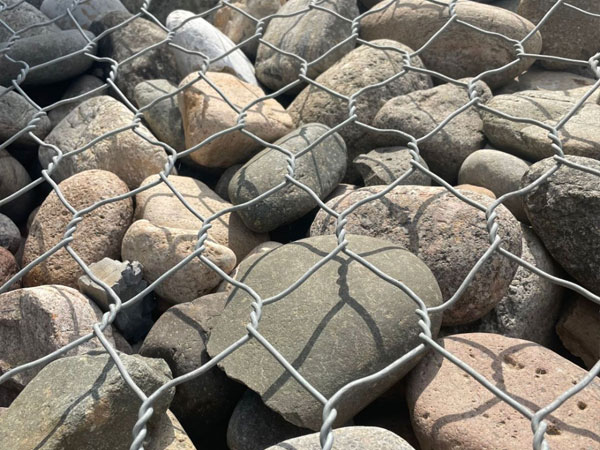
In the field of hydraulic engineering, traditional embankment protection has predominantly relied on rigid structures such as concrete and mortared masonry. While these structures achieve short-term slope stability, they act as impermeable barriers that sever the natural exchange between water and soil; this leads to imbalances in river ecosystems and reduced water self-purification capacity, ultimately compromising the ecological health of the entire watershed. As ecological principles become increasingly integrated into engineering construction, Gabion protection technology—characterized by its unique flexible structure and eco-friendliness—has emerged as an ideal alternative to traditional rigid methods, paving the way for the harmonious coexistence of hydraulic infrastructure and the natural environment.
Gabion protection technology involves assembling honeycomb-patterned wire mesh panels into cages and filling them with materials such as quarried stone or cobbles to create a flexible protective structure for eco-friendly riverbanks. The core process utilizes specialized machinery to weave low-carbon steel wire into mesh panels; these wires undergo hot-dip galvanizing with an aluminum-zinc alloy (containing 10% aluminum) and, for use in heavily polluted or harsh environments, receive a polymer coating to enhance corrosion resistance. The mesh panels are cut and assembled according to specifications to form cages of the required dimensions; these may consist of single-unit cages or multi-compartment cages separated by internal diaphragms.
At the construction site, workers fill the wire cages with stones that meet strength and size requirements, creating a continuous, flexible retaining structure. To ensure structural integrity, the edges of the mesh panels are reinforced with thicker wire, granting the cage sufficient strength while maintaining a degree of flexibility to accommodate deformation. This design overcomes the inherent limitations of rigid protection systems; by combining flexible support with permeability, it achieves the dual objectives of engineering protection and ecological conservation. Key Advantages
1. **Superior Ecological Compatibility:** The mesh structure facilitates the natural exchange of water and soil, fostering habitats for aquatic organisms and microorganisms, enhancing the water body's self-purification capacity, and improving water quality. Voids between the fill materials allow for soil accumulation and natural vegetation growth without the need for deliberate seeding, achieving both ecological restoration and landscape beautification.
2. **Structural Stability and Adaptability:** The double-twisted mesh structure ensures that localized damage does not compromise the integrity of the whole. The moderate deformability of the low-carbon steel wire allows the structure to act as a cohesive unit—eliminating the need for expansion joints—and adapt to uneven settlement. In the event of disasters like earthquakes, the loose fill material within the cages can self-adjust to maintain balance; the flexible structure prevents cracking, ensuring outstanding overall integrity and safety.
3. **Excellent Permeability and Scour Resistance:** The loose fill material creates abundant voids, allowing for the rapid drainage of seepage water from behind the wall and reducing groundwater levels and hydrostatic pressure. In environments with high-velocity currents or strong waves, the scour resistance coefficient is double that of conventional riprap; the voids dissipate impact forces, effectively withstanding erosion and wave action.
4. **Efficient Construction with Minimal Environmental Disruption:** Gabion units can be factory-produced as semi-finished products according to design specifications, with final assembly and stone filling performed on-site. The process is simple, suitable for mechanized operations, and minimally affected by weather conditions, significantly shortening construction schedules while ensuring high quality.
5. **Outstanding Cost-Effectiveness and Durability:** The wire features hot-dip Al-Zn alloy coating or polymer coating, providing strong corrosion resistance and a long service life. Low-cost materials such as roughly processed stones or crushed rock can be used as fill; the overall cost is lower than concrete and comparable to mortared masonry. Significant cost savings are achieved—particularly in areas with poor foundation conditions—by eliminating the need for extensive foundation treatment, resulting in excellent value for money.
Gabion protection technology involves assembling honeycomb-patterned wire mesh panels into cages and filling them with materials such as quarried stone or cobbles to create a flexible protective structure for eco-friendly riverbanks. The core process utilizes specialized machinery to weave low-carbon steel wire into mesh panels; these wires undergo hot-dip galvanizing with an aluminum-zinc alloy (containing 10% aluminum) and, for use in heavily polluted or harsh environments, receive a polymer coating to enhance corrosion resistance. The mesh panels are cut and assembled according to specifications to form cages of the required dimensions; these may consist of single-unit cages or multi-compartment cages separated by internal diaphragms.
At the construction site, workers fill the wire cages with stones that meet strength and size requirements, creating a continuous, flexible retaining structure. To ensure structural integrity, the edges of the mesh panels are reinforced with thicker wire, granting the cage sufficient strength while maintaining a degree of flexibility to accommodate deformation. This design overcomes the inherent limitations of rigid protection systems; by combining flexible support with permeability, it achieves the dual objectives of engineering protection and ecological conservation. Key Advantages
1. **Superior Ecological Compatibility:** The mesh structure facilitates the natural exchange of water and soil, fostering habitats for aquatic organisms and microorganisms, enhancing the water body's self-purification capacity, and improving water quality. Voids between the fill materials allow for soil accumulation and natural vegetation growth without the need for deliberate seeding, achieving both ecological restoration and landscape beautification.
2. **Structural Stability and Adaptability:** The double-twisted mesh structure ensures that localized damage does not compromise the integrity of the whole. The moderate deformability of the low-carbon steel wire allows the structure to act as a cohesive unit—eliminating the need for expansion joints—and adapt to uneven settlement. In the event of disasters like earthquakes, the loose fill material within the cages can self-adjust to maintain balance; the flexible structure prevents cracking, ensuring outstanding overall integrity and safety.
3. **Excellent Permeability and Scour Resistance:** The loose fill material creates abundant voids, allowing for the rapid drainage of seepage water from behind the wall and reducing groundwater levels and hydrostatic pressure. In environments with high-velocity currents or strong waves, the scour resistance coefficient is double that of conventional riprap; the voids dissipate impact forces, effectively withstanding erosion and wave action.
4. **Efficient Construction with Minimal Environmental Disruption:** Gabion units can be factory-produced as semi-finished products according to design specifications, with final assembly and stone filling performed on-site. The process is simple, suitable for mechanized operations, and minimally affected by weather conditions, significantly shortening construction schedules while ensuring high quality.
5. **Outstanding Cost-Effectiveness and Durability:** The wire features hot-dip Al-Zn alloy coating or polymer coating, providing strong corrosion resistance and a long service life. Low-cost materials such as roughly processed stones or crushed rock can be used as fill; the overall cost is lower than concrete and comparable to mortared masonry. Significant cost savings are achieved—particularly in areas with poor foundation conditions—by eliminating the need for extensive foundation treatment, resulting in excellent value for money.
 If the wire diameter of a stainless steel rope mesh is reduced, by how much will its impact resistance and load-bearing capacity decrease?
  Advantages and Application Scenarios of Expanded Metal Mesh
  Why Stainless Steel Mining Screens Rust and How to Treat Them After Rusting
  What factors should be considered when selecting zinc-steel fencing?
  What are the anti-corrosion processes for framed wire mesh fencing?
  Why are bent-profile guardrails the preferred choice for municipal and industrial park perimeter protection?
  Detailed Procedure for Installing External Wall Insulation Mesh
  What role does hot-dip galvanizing technology play in guardrail products?
  When it comes to balcony safety, it is worth learning more about stainless steel cable mesh fall-prevention netting.
  Understanding the Multifaceted Engineering Value of Stainless Steel Rope Mesh
  How to determine whether manufactured welded wire mesh meets quality standards
  Why is mesh used for wall plastering?
  Four simple steps to teach you how to install wall corner protectors
  How to make the mesh fabric adhere more firmly during external wall insulation?
  4 Practical Tips for Buying Fiberglass Mesh
  How to Choose Chain-Link Mesh
  Five Key Reasons to Choose Stainless Steel Rope Mesh: Reliability and Cost-Effectiveness
  How can gabion mesh be applied in complex terrain?
  How much do you know about the tensile strength and elongation of Gabion mesh?
  How to distinguish the quality of fiberglass mesh?