
What is the filtration degree of stainless steel woven wire mesh?
2024-07-16
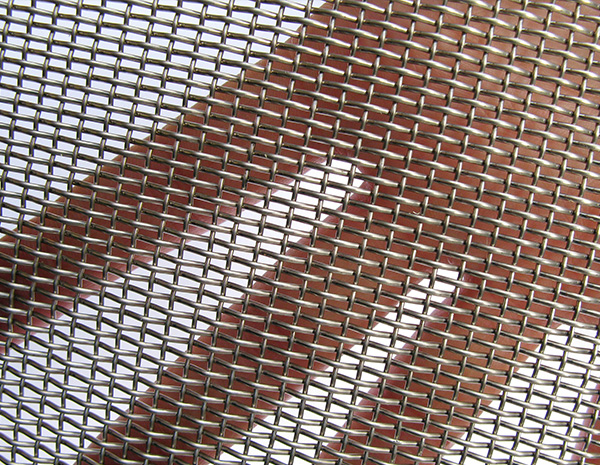
When stainless steel wire mesh is used as a stainless steel filter, it can block the minimum diameter size of most solid particles, which is called the filtration degree of the stainless steel filter.
The filtration degree of square hole stainless steel wire mesh is its mesh size. The actual value of the mesh size directly affects its filtration degree.
There are three types of filtration degrees for stainless steel dense mesh: nominal filtration degree, absolute filtration degree, and actual filtration degree.
Nominal filtration degree (also called nominal aperture): refers to the cross-section of the woven stainless steel dense mesh, the inscribed circle diameter of the triangular hole composed of warp and weft interweaving.
Absolute filtration degree (also called absolute aperture): refers to the cross-section of the twill woven dense mesh, the maximum inscribed circle diameter on the inclined surface of the triangular hole composed of two adjacent wefts and warp wires.
Actual filtration degree: refers to the filtration degree of the dense mesh under actual use conditions. For a specific specification of dense stainless steel filter, when the use conditions change, the actual filtration degree of the dense stainless steel wire mesh of the same specification will also change accordingly. The actual filtration degree of the dense mesh is directly affected by the use conditions such as temperature, pressure difference, length of use, viscosity of the medium, number of bending times of the filter holes, etc. Therefore, the actual filtration degree is a variable value.
The filtration degree of square hole stainless steel wire mesh is its mesh size. The actual value of the mesh size directly affects its filtration degree.
There are three types of filtration degrees for stainless steel dense mesh: nominal filtration degree, absolute filtration degree, and actual filtration degree.
Nominal filtration degree (also called nominal aperture): refers to the cross-section of the woven stainless steel dense mesh, the inscribed circle diameter of the triangular hole composed of warp and weft interweaving.
Absolute filtration degree (also called absolute aperture): refers to the cross-section of the twill woven dense mesh, the maximum inscribed circle diameter on the inclined surface of the triangular hole composed of two adjacent wefts and warp wires.
Actual filtration degree: refers to the filtration degree of the dense mesh under actual use conditions. For a specific specification of dense stainless steel filter, when the use conditions change, the actual filtration degree of the dense stainless steel wire mesh of the same specification will also change accordingly. The actual filtration degree of the dense mesh is directly affected by the use conditions such as temperature, pressure difference, length of use, viscosity of the medium, number of bending times of the filter holes, etc. Therefore, the actual filtration degree is a variable value.
 If the wire diameter of a stainless steel rope mesh is reduced, by how much will its impact resistance and load-bearing capacity decrease?
  Advantages and Application Scenarios of Expanded Metal Mesh
  Why Stainless Steel Mining Screens Rust and How to Treat Them After Rusting
  Gabion protection technology
  What factors should be considered when selecting zinc-steel fencing?
  What are the anti-corrosion processes for framed wire mesh fencing?
  Why are bent-profile guardrails the preferred choice for municipal and industrial park perimeter protection?
  Detailed Procedure for Installing External Wall Insulation Mesh
  What role does hot-dip galvanizing technology play in guardrail products?
  When it comes to balcony safety, it is worth learning more about stainless steel cable mesh fall-prevention netting.
  Understanding the Multifaceted Engineering Value of Stainless Steel Rope Mesh
  How to determine whether manufactured welded wire mesh meets quality standards
  Why is mesh used for wall plastering?
  Four simple steps to teach you how to install wall corner protectors
  How to make the mesh fabric adhere more firmly during external wall insulation?
  4 Practical Tips for Buying Fiberglass Mesh
  How to Choose Chain-Link Mesh
  Five Key Reasons to Choose Stainless Steel Rope Mesh: Reliability and Cost-Effectiveness
  How can gabion mesh be applied in complex terrain?
  How much do you know about the tensile strength and elongation of Gabion mesh?