
What are the production processes of stainless steel screens?
2025-05-09
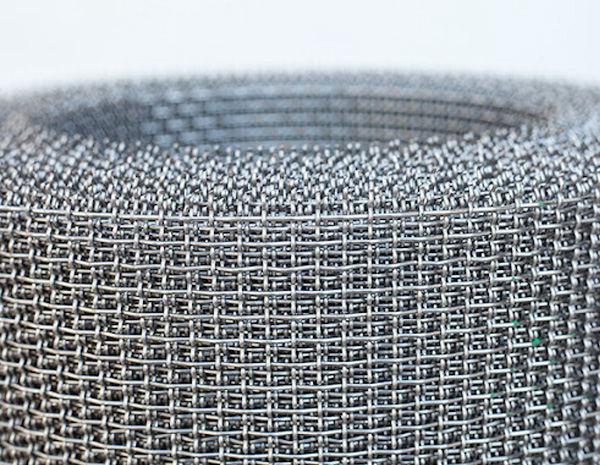
There are 4 production processes for stainless steel screens. They are divided into stretched stainless steel screens, flat-top stainless steel screens, corrugated stainless steel screens, and embossed stainless steel screens.
Stretched stainless steel screens
It is made of high-quality stainless steel plates by stamping or stretching, so it is also called stainless steel stretched mesh or stainless steel plate mesh, stainless steel punching mesh. Stainless steel plate mesh can be used for escalators, passages, mines, locomotives, roads, municipal facilities, and residential areas.
It is made of high-quality stainless steel plates by stamping or stretching, so it is also called stainless steel stretched mesh or stainless steel plate mesh, stainless steel punching mesh. Stainless steel plate mesh can be used for escalators, passages, mines, locomotives, roads, municipal facilities, and residential areas.
Corrugated stainless steel screens
There are two types: single-wire screens and double-wire screens. The single-wire generally has a small aperture and coarse wire. The screening rate is better than that of steel plate screens (with edge wrapping, non-edge wrapping and flattening). The double-wire aperture is larger and the wire is fine. The elasticity and wear resistance are better than those of single-wire heavy-duty screens. The price is lower than that of single-wire heavy-duty screens, which is economical and applicable.
There are two types: single-wire screens and double-wire screens. The single-wire generally has a small aperture and coarse wire. The screening rate is better than that of steel plate screens (with edge wrapping, non-edge wrapping and flattening). The double-wire aperture is larger and the wire is fine. The elasticity and wear resistance are better than those of single-wire heavy-duty screens. The price is lower than that of single-wire heavy-duty screens, which is economical and applicable.
Grinded stainless steel screens
It uses high-quality steel wire, stainless steel wire, iron wire, galvanized wire and other materials, which are first rolled and then woven, bidirectional bending, bidirectional wave separation bending, and unidirectional bending. It is made of stainless steel wire that is pre-bent into a wavy shape and woven in a plain weave. Since the metal wire is pre-bent by a mold, the metal wire in two directions can be in a relatively correct position, thereby ensuring the consistency of the mesh size of the crimped wire mesh.
It uses high-quality steel wire, stainless steel wire, iron wire, galvanized wire and other materials, which are first rolled and then woven, bidirectional bending, bidirectional wave separation bending, and unidirectional bending. It is made of stainless steel wire that is pre-bent into a wavy shape and woven in a plain weave. Since the metal wire is pre-bent by a mold, the metal wire in two directions can be in a relatively correct position, thereby ensuring the consistency of the mesh size of the crimped wire mesh.
Flat-top stainless steel screen
Using high-quality high-carbon steel and manganese steel as raw materials, it is characterized by wear resistance, high temperature resistance, high toughness, earthquake resistance, tension resistance, no interference, and better screening rate than steel plate screen. It is mainly used in large-scale stone processing, asphalt mixing plants, coal mines, metallurgy, chemical industry and other industries.
Using high-quality high-carbon steel and manganese steel as raw materials, it is characterized by wear resistance, high temperature resistance, high toughness, earthquake resistance, tension resistance, no interference, and better screening rate than steel plate screen. It is mainly used in large-scale stone processing, asphalt mixing plants, coal mines, metallurgy, chemical industry and other industries.
 If the wire diameter of a stainless steel rope mesh is reduced, by how much will its impact resistance and load-bearing capacity decrease?
  Advantages and Application Scenarios of Expanded Metal Mesh
  Why Stainless Steel Mining Screens Rust and How to Treat Them After Rusting
  Gabion protection technology
  What factors should be considered when selecting zinc-steel fencing?
  What are the anti-corrosion processes for framed wire mesh fencing?
  Why are bent-profile guardrails the preferred choice for municipal and industrial park perimeter protection?
  Detailed Procedure for Installing External Wall Insulation Mesh
  What role does hot-dip galvanizing technology play in guardrail products?
  When it comes to balcony safety, it is worth learning more about stainless steel cable mesh fall-prevention netting.
  Understanding the Multifaceted Engineering Value of Stainless Steel Rope Mesh
  How to determine whether manufactured welded wire mesh meets quality standards
  Why is mesh used for wall plastering?
  Four simple steps to teach you how to install wall corner protectors
  How to make the mesh fabric adhere more firmly during external wall insulation?
  4 Practical Tips for Buying Fiberglass Mesh
  How to Choose Chain-Link Mesh
  Five Key Reasons to Choose Stainless Steel Rope Mesh: Reliability and Cost-Effectiveness
  How can gabion mesh be applied in complex terrain?
  How much do you know about the tensile strength and elongation of Gabion mesh?