
What are the advantages of using PVC corner protectors?
2025-07-09
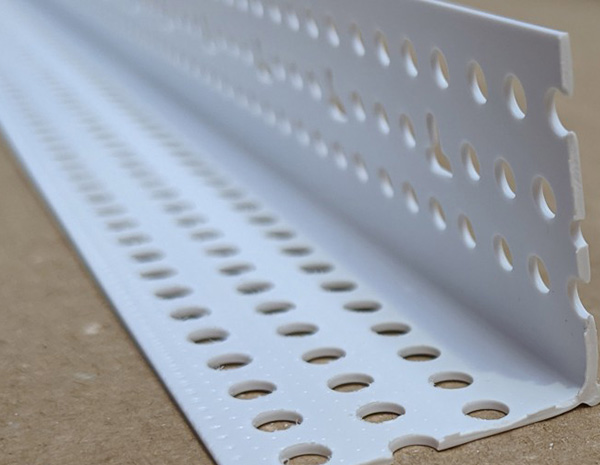
According to many years of experience in construction, the corners are easily damaged due to the high frequency of contact at the corners or the lack of firmness of the corners. However, the use of PVC corner protectors enhances the impact resistance of the corners, which can maintain the long-term beauty of the corners without being damaged. Therefore, the use of PVC corner protectors is advantageous.
PVC corner protectors and corner protectors play a key role in construction.
On the other hand, the use of corner protectors by decorators greatly speeds up the construction speed, saves labor, reduces project costs, and can make more money.
Recent decoration construction is becoming increasingly serious. It is easier to use yin and yang corners to cover windows. When the interior is plastered with cement mixed mortar, the 1:2 cement mortar is no longer used for dark corner protection within the height of 2m for the indoor walls, columns, doors, and windows (it is forbidden to scrape cement paste at the corners).
All external corners are plastered at the same time as the large wall surface to avoid cracks at the joints due to darkening of the corner guards. The key to wall plastering operation is.
1. Sprinkle water on the wall surface to moisten it the day before the wall plastering. The watering should be even, and there should be no omissions or excessive watering;
2. Before plastering the exterior wall, first post the grid strips according to the horizontal and vertical grid lines that pop up.
When posting the grid strips, thin plastering should be applied at the grid strips to cover the bottom layer, and the grid strips should be posted on the thin plastering layer; the exterior wall plastering is layered and modified. When layered, each layer of plastering should be completed at one time without leaving any joints; if the height of the grid exceeds one step, the upper and lower scaffolding should be set up, and the upper and lower layers should be operated at the same time to complete the plastering at one time; the interior wall plastering is based on one wall as a plastering unit, and the layered modification is applied. When the layered modification is applied, one wall should be plastered at one time without leaving any joints.
PVC corner protectors and corner protectors play a key role in construction.
On the other hand, the use of corner protectors by decorators greatly speeds up the construction speed, saves labor, reduces project costs, and can make more money.
Recent decoration construction is becoming increasingly serious. It is easier to use yin and yang corners to cover windows. When the interior is plastered with cement mixed mortar, the 1:2 cement mortar is no longer used for dark corner protection within the height of 2m for the indoor walls, columns, doors, and windows (it is forbidden to scrape cement paste at the corners).
All external corners are plastered at the same time as the large wall surface to avoid cracks at the joints due to darkening of the corner guards. The key to wall plastering operation is.
1. Sprinkle water on the wall surface to moisten it the day before the wall plastering. The watering should be even, and there should be no omissions or excessive watering;
2. Before plastering the exterior wall, first post the grid strips according to the horizontal and vertical grid lines that pop up.
When posting the grid strips, thin plastering should be applied at the grid strips to cover the bottom layer, and the grid strips should be posted on the thin plastering layer; the exterior wall plastering is layered and modified. When layered, each layer of plastering should be completed at one time without leaving any joints; if the height of the grid exceeds one step, the upper and lower scaffolding should be set up, and the upper and lower layers should be operated at the same time to complete the plastering at one time; the interior wall plastering is based on one wall as a plastering unit, and the layered modification is applied. When the layered modification is applied, one wall should be plastered at one time without leaving any joints.
 If the wire diameter of a stainless steel rope mesh is reduced, by how much will its impact resistance and load-bearing capacity decrease?
  Advantages and Application Scenarios of Expanded Metal Mesh
  Why Stainless Steel Mining Screens Rust and How to Treat Them After Rusting
  Gabion protection technology
  What factors should be considered when selecting zinc-steel fencing?
  What are the anti-corrosion processes for framed wire mesh fencing?
  Why are bent-profile guardrails the preferred choice for municipal and industrial park perimeter protection?
  Detailed Procedure for Installing External Wall Insulation Mesh
  What role does hot-dip galvanizing technology play in guardrail products?
  When it comes to balcony safety, it is worth learning more about stainless steel cable mesh fall-prevention netting.
  Understanding the Multifaceted Engineering Value of Stainless Steel Rope Mesh
  How to determine whether manufactured welded wire mesh meets quality standards
  Why is mesh used for wall plastering?
  Four simple steps to teach you how to install wall corner protectors
  How to make the mesh fabric adhere more firmly during external wall insulation?
  4 Practical Tips for Buying Fiberglass Mesh
  How to Choose Chain-Link Mesh
  Five Key Reasons to Choose Stainless Steel Rope Mesh: Reliability and Cost-Effectiveness
  How can gabion mesh be applied in complex terrain?
  How much do you know about the tensile strength and elongation of Gabion mesh?