
What are the standards for steel mesh?
2025-08-20
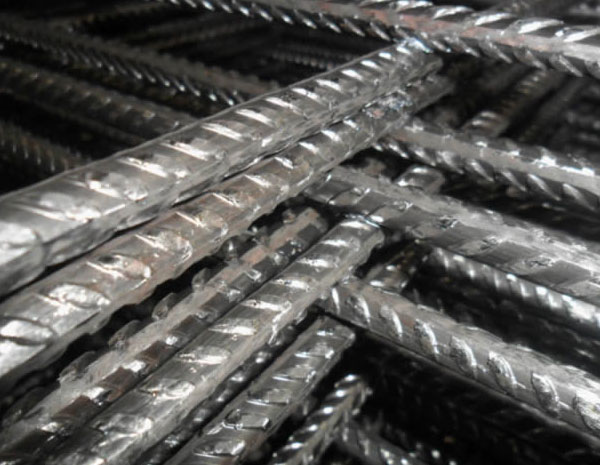
Standard steel mesh features high product precision, minimal error, and excellent quality. Welded steel mesh is a welded mesh product made of longitudinal and transverse steel bars arranged at regular intervals and at right angles to each other, with all intersections welded together using high-resistance pressure.
Applications: Steel mesh is primarily used for coal mine tunnel protection and reinforcement, concrete pavements, bridge decks, airport runways, tunnel linings, and building floors, roofs, walls, paving, concrete pipes, and piles.
Advantages of Steel Mesh
1. Guaranteed Project Quality
Welded steel mesh is manufactured under strict factory quality control on a fully automated, intelligent production line. Mesh size, steel bar specifications, and quality are strictly controlled. This eliminates manual mesh tying errors, insufficient tying, incorrect tying, and shoddy workmanship. The mesh boasts high strength, excellent rigidity, uniform and accurate spacing, and high weld strength, significantly improving project quality. 2. Improved Seismic and Crack Resistance: The longitudinal and transverse bars of welded steel mesh form a mesh structure, providing excellent bonding and anchoring properties with concrete. Loads are evenly distributed, significantly improving the seismic crack resistance of reinforced concrete structures. According to actual tests, using welded steel mesh in road paving can reduce cracking by over 75% compared to manually tied mesh.
3. Reduced Rebar Use: The design strength of currently used coiled steel bars is 210 N/mm², while the design strength of welded steel mesh is 100 N/mm². Based on the principle of equal strength replacement and considering a variety of factors, using welded steel mesh can save over 30% of steel. Furthermore, the mesh requires no processing after delivery to the construction site, eliminating any wastage.
4. Accelerated Construction: Using welded steel mesh can expedite construction. Once the welded steel mesh is laid out as required, concrete can be poured, eliminating the on-site steps of cutting, placing, and tying the steel bars. This can save 50%-70% of labor time, significantly accelerating construction progress and shortening the construction period. Welded mesh offers excellent overall economic benefits. The design strength of welded mesh reinforcement is 50% (for smooth welded mesh) to 70% (for guardrail mesh) higher than Type I reinforcement. Even after considering certain structural requirements, it can still save approximately 30% of reinforcement. Furthermore, the processing fee for loose rebar with a diameter of less than 12mm is approximately 10% to 15% of the material cost. Taking all these factors into consideration (compared to Type I reinforcement), the cost of rebar construction can be reduced by approximately 1%.
1. Guaranteed Project Quality
Welded steel mesh is manufactured under strict factory quality control on a fully automated, intelligent production line. Mesh size, steel bar specifications, and quality are strictly controlled. This eliminates manual mesh tying errors, insufficient tying, incorrect tying, and shoddy workmanship. The mesh boasts high strength, excellent rigidity, uniform and accurate spacing, and high weld strength, significantly improving project quality. 2. Improved Seismic and Crack Resistance: The longitudinal and transverse bars of welded steel mesh form a mesh structure, providing excellent bonding and anchoring properties with concrete. Loads are evenly distributed, significantly improving the seismic crack resistance of reinforced concrete structures. According to actual tests, using welded steel mesh in road paving can reduce cracking by over 75% compared to manually tied mesh.
3. Reduced Rebar Use: The design strength of currently used coiled steel bars is 210 N/mm², while the design strength of welded steel mesh is 100 N/mm². Based on the principle of equal strength replacement and considering a variety of factors, using welded steel mesh can save over 30% of steel. Furthermore, the mesh requires no processing after delivery to the construction site, eliminating any wastage.
4. Accelerated Construction: Using welded steel mesh can expedite construction. Once the welded steel mesh is laid out as required, concrete can be poured, eliminating the on-site steps of cutting, placing, and tying the steel bars. This can save 50%-70% of labor time, significantly accelerating construction progress and shortening the construction period. Welded mesh offers excellent overall economic benefits. The design strength of welded mesh reinforcement is 50% (for smooth welded mesh) to 70% (for guardrail mesh) higher than Type I reinforcement. Even after considering certain structural requirements, it can still save approximately 30% of reinforcement. Furthermore, the processing fee for loose rebar with a diameter of less than 12mm is approximately 10% to 15% of the material cost. Taking all these factors into consideration (compared to Type I reinforcement), the cost of rebar construction can be reduced by approximately 1%.
 If the wire diameter of a stainless steel rope mesh is reduced, by how much will its impact resistance and load-bearing capacity decrease?
  Advantages and Application Scenarios of Expanded Metal Mesh
  Why Stainless Steel Mining Screens Rust and How to Treat Them After Rusting
  Gabion protection technology
  What factors should be considered when selecting zinc-steel fencing?
  What are the anti-corrosion processes for framed wire mesh fencing?
  Why are bent-profile guardrails the preferred choice for municipal and industrial park perimeter protection?
  Detailed Procedure for Installing External Wall Insulation Mesh
  What role does hot-dip galvanizing technology play in guardrail products?
  When it comes to balcony safety, it is worth learning more about stainless steel cable mesh fall-prevention netting.
  Understanding the Multifaceted Engineering Value of Stainless Steel Rope Mesh
  How to determine whether manufactured welded wire mesh meets quality standards
  Why is mesh used for wall plastering?
  Four simple steps to teach you how to install wall corner protectors
  How to make the mesh fabric adhere more firmly during external wall insulation?
  4 Practical Tips for Buying Fiberglass Mesh
  How to Choose Chain-Link Mesh
  Five Key Reasons to Choose Stainless Steel Rope Mesh: Reliability and Cost-Effectiveness
  How can gabion mesh be applied in complex terrain?
  How much do you know about the tensile strength and elongation of Gabion mesh?