
Which method is better for galvanizing guardrail mesh?
2025-08-27
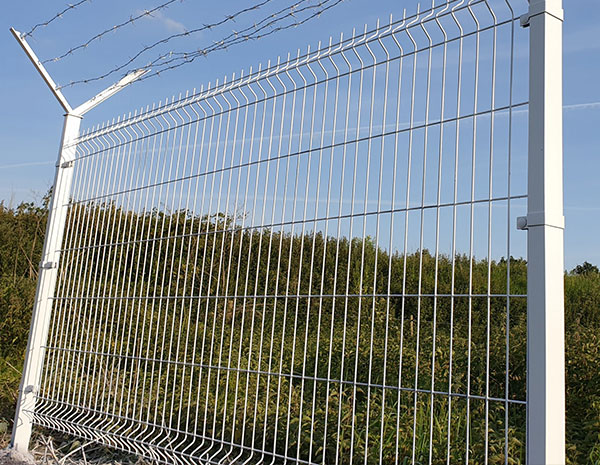
As a protective product, guardrails are subject to long-term outdoor use, necessitating long-term corrosion protection. Generally speaking, the primary method used for surface galvanizing for highway and railway guardrails is hot-dip galvanizing. However, some smaller manufacturers also utilize cold-dip galvanizing. Here, we'll explain the differences between the two.
Hot-dip galvanizing is a relatively old galvanizing method, having been used in industry for 170 years since France first introduced it in 1836. However, hot-dip galvanizing of guardrail mesh has recently become widely used by major guardrail manufacturers in Anping.
The production process for hot-dip galvanized guardrail mesh primarily includes: mesh preparation → pre-galvanizing treatment → hot-dip galvanizing → post-galvanizing treatment → finished product inspection. Conventionally, the pre-galvanizing treatment is often used for the production of hot-dip galvanized guardrail mesh. As a protective product, guardrails are subject to long-term outdoor use, necessitating long-term corrosion protection. Generally speaking, hot-dip galvanizing is the primary method used for surface galvanizing of highway and railway guardrails. However, some smaller factories also utilize cold-dip galvanizing. The senior engineers at Anping County Ruixiang Guardrail Factory will explain the differences between the two methods.
Off-line annealing for hot-dip galvanizing involves recrystallization annealing of the guardrail mesh in a bottom-type or bell-type annealing furnace before entering the hot-dip galvanizing line. This eliminates the need for an annealing step on the galvanizing line. Prior to hot-dip galvanizing, the mesh must maintain a clean, pure iron surface free of oxides and other contaminants. This method involves first removing the surface oxide scale from the annealed mesh using pickling, followed by a protective coating of zinc chloride or a mixture of ammonium chloride and zinc chloride to prevent further oxidation.
If wet hot-dip galvanizing is used, the mesh is dipped into a molten zinc bath before the solvent has dried off (i.e., while still wet). This method has the following disadvantages: It can only be galvanized in a lead-free environment, resulting in a thick alloy layer with poor adhesion. Any zinc slag that may form accumulates at the interface between the zinc and lead baths and cannot settle on the bottom of the bath (because the zinc slag has a higher specific gravity than the zinc bath but lower than the lead bath). This contaminates the surface of the fence mesh by penetrating the zinc layer. This method of hot-dip galvanizing has been largely phased out in recent years.
Second, the single-sheet method: First, the annealed mesh is sent to a pickling workshop, where sulfuric or hydrochloric acid is used to remove the oxidized scale from the steel surface. After pickling, the mesh is immediately immersed in a water tank for galvanizing to prevent further oxidation. After pickling, rinsing with water, squeezing, drying, and hot-dip galvanizing, it is placed in a zinc bath (maintained at 445-465°C) and then oiled and chromized. The hot-dip galvanized mesh produced by this method has significantly improved quality compared to wet-galvanized products, and is only of certain value for small-scale guardrail production.
Hot-dip galvanizing is a relatively old galvanizing method, having been used in industry for 170 years since France first introduced it in 1836. However, hot-dip galvanizing of guardrail mesh has recently become widely used by major guardrail manufacturers in Anping.
The production process for hot-dip galvanized guardrail mesh primarily includes: mesh preparation → pre-galvanizing treatment → hot-dip galvanizing → post-galvanizing treatment → finished product inspection. Conventionally, the pre-galvanizing treatment is often used for the production of hot-dip galvanized guardrail mesh. As a protective product, guardrails are subject to long-term outdoor use, necessitating long-term corrosion protection. Generally speaking, hot-dip galvanizing is the primary method used for surface galvanizing of highway and railway guardrails. However, some smaller factories also utilize cold-dip galvanizing. The senior engineers at Anping County Ruixiang Guardrail Factory will explain the differences between the two methods.
Off-line annealing for hot-dip galvanizing involves recrystallization annealing of the guardrail mesh in a bottom-type or bell-type annealing furnace before entering the hot-dip galvanizing line. This eliminates the need for an annealing step on the galvanizing line. Prior to hot-dip galvanizing, the mesh must maintain a clean, pure iron surface free of oxides and other contaminants. This method involves first removing the surface oxide scale from the annealed mesh using pickling, followed by a protective coating of zinc chloride or a mixture of ammonium chloride and zinc chloride to prevent further oxidation.
If wet hot-dip galvanizing is used, the mesh is dipped into a molten zinc bath before the solvent has dried off (i.e., while still wet). This method has the following disadvantages: It can only be galvanized in a lead-free environment, resulting in a thick alloy layer with poor adhesion. Any zinc slag that may form accumulates at the interface between the zinc and lead baths and cannot settle on the bottom of the bath (because the zinc slag has a higher specific gravity than the zinc bath but lower than the lead bath). This contaminates the surface of the fence mesh by penetrating the zinc layer. This method of hot-dip galvanizing has been largely phased out in recent years.
Second, the single-sheet method: First, the annealed mesh is sent to a pickling workshop, where sulfuric or hydrochloric acid is used to remove the oxidized scale from the steel surface. After pickling, the mesh is immediately immersed in a water tank for galvanizing to prevent further oxidation. After pickling, rinsing with water, squeezing, drying, and hot-dip galvanizing, it is placed in a zinc bath (maintained at 445-465°C) and then oiled and chromized. The hot-dip galvanized mesh produced by this method has significantly improved quality compared to wet-galvanized products, and is only of certain value for small-scale guardrail production.
 If the wire diameter of a stainless steel rope mesh is reduced, by how much will its impact resistance and load-bearing capacity decrease?
  Advantages and Application Scenarios of Expanded Metal Mesh
  Why Stainless Steel Mining Screens Rust and How to Treat Them After Rusting
  Gabion protection technology
  What factors should be considered when selecting zinc-steel fencing?
  What are the anti-corrosion processes for framed wire mesh fencing?
  Why are bent-profile guardrails the preferred choice for municipal and industrial park perimeter protection?
  Detailed Procedure for Installing External Wall Insulation Mesh
  What role does hot-dip galvanizing technology play in guardrail products?
  When it comes to balcony safety, it is worth learning more about stainless steel cable mesh fall-prevention netting.
  Understanding the Multifaceted Engineering Value of Stainless Steel Rope Mesh
  How to determine whether manufactured welded wire mesh meets quality standards
  Why is mesh used for wall plastering?
  Four simple steps to teach you how to install wall corner protectors
  How to make the mesh fabric adhere more firmly during external wall insulation?
  4 Practical Tips for Buying Fiberglass Mesh
  How to Choose Chain-Link Mesh
  Five Key Reasons to Choose Stainless Steel Rope Mesh: Reliability and Cost-Effectiveness
  How can gabion mesh be applied in complex terrain?
  How much do you know about the tensile strength and elongation of Gabion mesh?