
What are the protective functions of gabion mesh?
2025-12-31
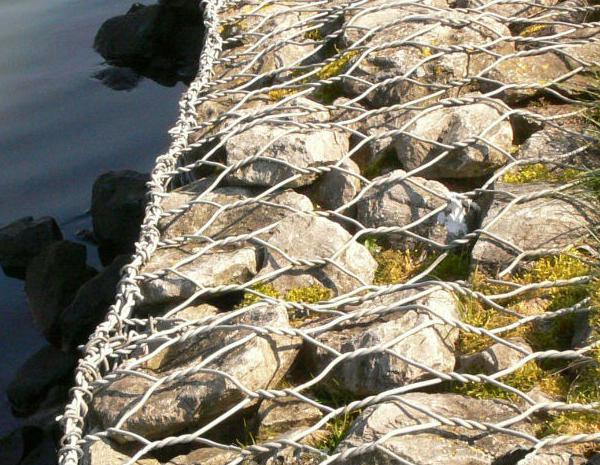
Retaining walls and slope protection structures built with gabions, filled with loose material containing numerous pores, facilitate the compaction of pore water in the backfill and the soil beneath the slope. Once surface water infiltrates the soil, the rapid compaction of the gabion effectively lowers the water table, reducing water pressure behind the wall and below the slope. In landslide and debris flow control projects, the timely compaction of water reduces the probability of wall failure, while the wall's excellent deformation capacity effectively mitigates external impacts. Gabions are widely used because they can withstand varying degrees of pressure, can be positioned and moved according to surface conditions, and must be able to support the weight of the stones and other gabions placed on them. They also withstand rainwater erosion while maintaining structural integrity.
I. Gabion Mesh Slope Protection
Gabion mesh possesses long-term corrosion resistance and can be used in geological structures such as mountains, riverbanks, wetland boundaries, and coastlines. It can provide long-term slope protection and offer a stable living environment for the healthy growth of animals. The mesh mattresses have long-term corrosion resistance and can be used in emergency situations. They are a reinforced device with sufficient toughness and porosity to stabilize the root system of animals, which is beneficial to their growth. Gabion mesh is typically used in riverbeds and areas with sediment deposition. Its abrasion resistance helps resist the erosion of flowing water, creating a stable environment for the healthy growth of animals. Animals are already placed inside the mesh, and the final material decomposes, contributing to the cohesive strength of the root system. The flexibility of the installation is a fundamental factor in riverbed and slope protection. The design of gabion mesh and Reno mattresses for slope protection effectively curbs soil erosion and river scouring, provides favorable conditions for surface vegetation growth, and reduces pressure on slopes. When deciding on a suitable slope protection design, designers must consider existing soil conditions, slope gradient, additional forces, water erosion, sheet size, and many other factors.
II. Gabion Mesh for Bridges
Gabion mesh can be used on or around bridges to stabilize bridge foundations or solidify surrounding soil. Gabion mesh structures consist of multiple mesh boxes with high tensile strength. The mesh boxes and filling material form a strong protective structure, and the use of spacing reduces movement between stones, effectively enhancing structural stability. The effectiveness of gabion mesh becomes more apparent over time.
III. Gabion Mesh for Highway, Railway, and Mountain Protection
Gabion mesh for flat terrain protection is characterized by its resistance to breakage and corrosion, making it an ideal material choice for managing rockfalls in highway and railway rockfall protection projects. In the past, precarious cliffs suspended above road surfaces received no protection. Now, with road widening and the construction of new roads, this problem has resurfaced. We must find an effective solution to manage this issue. Gabion retaining nets are a safe and effective solution, widely used in the United States. The thin and durable structure of gabion retaining nets gives them a unique advantage in slope protection. Broken rocks are firmly held in place by the highly elastic wire mesh. Furthermore, the double-twisted hexagonal mesh can prevent landslides caused by sudden increases in load on the slope and reduce the mechanical stress caused by falling rocks due to rock fractures. The high elasticity, rigidity, and long-term corrosion resistance of double-twisted hexagonal metal make its adoption rate far higher than other protective products.
IV. Large-scale Water Conservancy Projects
Gabion mesh possesses permeability; the gaps between the stones provide ample drainage space, reducing hydrostatic pressure. It eliminates the need for external drainage devices and easily cracked concrete structures. In areas with strong winds and waves, the pores between the stones significantly reduce the impact of waves hitting the mesh, and the vacuum suction generated when waves recede is also destroyed, effectively achieving a protective effect. The pores within the gabion mesh and mattress provide a self-purification mechanism for water bodies, protecting and improving water sources and quality. The filling material, through the insertion of soil layers or naturally deposited soil, creates a technological advantage for greening and filling. Even without sowing seeds, plants will naturally grow, optimizing and beautifying the environment, and improving and restoring the ecological environment. In water conservancy projects, the use of gabion mesh is very economical. The gabion mesh system consists of wire mesh cages and filling materials. It is less expensive than ordinary construction materials. Our mesh is compressed into boxes, and after that, stones can be directly filled in. The filling materials only need to be weather-resistant and have a certain strength. Generally, stones of different grades can be used as filling materials at the project site. Sometimes, even some relatively clean construction waste can be used as filling materials. Therefore, the cost is low, especially when the foundation conditions are poor, it can save a large proportion of the project cost of foundation treatment.
 If the wire diameter of a stainless steel rope mesh is reduced, by how much will its impact resistance and load-bearing capacity decrease?
  Advantages and Application Scenarios of Expanded Metal Mesh
  Why Stainless Steel Mining Screens Rust and How to Treat Them After Rusting
  Gabion protection technology
  What factors should be considered when selecting zinc-steel fencing?
  What are the anti-corrosion processes for framed wire mesh fencing?
  Why are bent-profile guardrails the preferred choice for municipal and industrial park perimeter protection?
  Detailed Procedure for Installing External Wall Insulation Mesh
  What role does hot-dip galvanizing technology play in guardrail products?
  When it comes to balcony safety, it is worth learning more about stainless steel cable mesh fall-prevention netting.
  Understanding the Multifaceted Engineering Value of Stainless Steel Rope Mesh
  How to determine whether manufactured welded wire mesh meets quality standards
  Why is mesh used for wall plastering?
  Four simple steps to teach you how to install wall corner protectors
  How to make the mesh fabric adhere more firmly during external wall insulation?
  4 Practical Tips for Buying Fiberglass Mesh
  How to Choose Chain-Link Mesh
  Five Key Reasons to Choose Stainless Steel Rope Mesh: Reliability and Cost-Effectiveness
  How can gabion mesh be applied in complex terrain?
  How much do you know about the tensile strength and elongation of Gabion mesh?