
Which industries are suitable for different types of screens?
2026-03-11
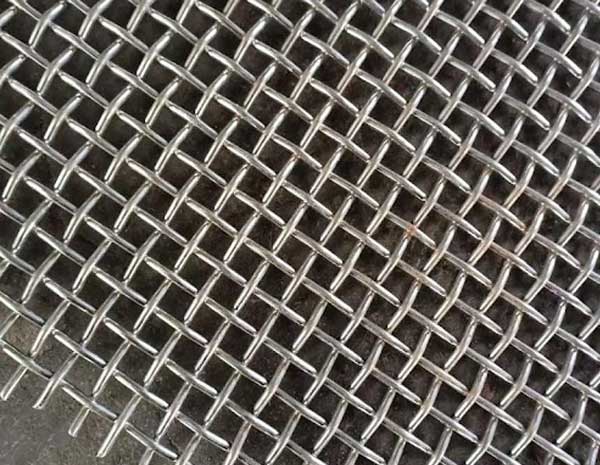
Different types of sieves are suitable for different industries and applications. Here are some common sieve types and their applicable industries:
1. Woven sieves:
Applicable industries: General particle size analysis in laboratories and industrial fields.
Applicable industries: General particle size analysis in laboratories and industrial fields.
Features: Suitable for applications requiring fine screening, such as laboratory research and chemical raw material screening.
2. Perforated metal sieves:
Applicable industries: Mining, construction, and other heavy-duty applications involving larger particles.
Applicable industries: Mining, construction, and other heavy-duty applications involving larger particles.
Features: Impact resistant and deformation resistant, suitable for preliminary screening and heavy-duty screening.
3. Electroformed wire mesh:
Applicable industries: Pharmaceuticals, advanced materials research, and other applications requiring high-precision particle size measurement.
Applicable industries: Pharmaceuticals, advanced materials research, and other applications requiring high-precision particle size measurement.
Features: High precision, suitable for applications with extremely high particle size requirements.
4. Silk sieves:
Applicable industries: Grain industry, abrasive wheel and abrasive cloth factories.
Applicable industries: Grain industry, abrasive wheel and abrasive cloth factories.
Features: Woven from mulberry silk, suitable for grain screening and sand screening.
5. Metal wire sieves:
Applicable industries: Chemical industry, food and condiment industry, mining industry, pharmaceuticals, papermaking, metal powder manufacturing, fertilizer industry, etc.
Applicable industries: Chemical industry, food and condiment industry, mining industry, pharmaceuticals, papermaking, metal powder manufacturing, fertilizer industry, etc.
Features: High temperature resistance, wear resistance, and good corrosion resistance (e.g., stainless steel screens).
6. Manganese Steel Screens:
Applicable Industries: Mining, working conditions requiring impact and wear resistance.
Applicable Industries: Mining, working conditions requiring impact and wear resistance.
Features: High strength, good wear resistance, suitable for ore screening and heavy-duty screening.
7. Plastic Screens:
Applicable Industries: Construction, agriculture, food processing, and other applications where high precision is not required.
Applicable Industries: Construction, agriculture, food processing, and other applications where high precision is not required.
Features: Lightweight, easy to process, and low cost.
8. Nylon Screens:
Applicable Industries: Mining, chemical, environmental protection, food, pharmaceutical, etc.
Applicable Industries: Mining, chemical, environmental protection, food, pharmaceutical, etc.
Features: Wear-resistant, corrosion-resistant, high strength, and good anti-clogging performance.
9. Polyurethane Screens:
Applicable Industries: Vibrating screening equipment, mining, etc.
Applicable Industries: Vibrating screening equipment, mining, etc.
Features: Wear-resistant, corrosion-resistant, and good elasticity.
10. Rubber Screens:
Applicable Industries: Vibrating screens, mining equipment, and other harsh working environments.
Features: Wear-resistant, impact-resistant, absorbs vibration energy, and reduces noise. 11. Perforated Metal Screen:
Applicable Industries: Mining, building materials production, chemical industry, etc.
Features: Large mesh size, strong impact resistance, suitable for heavy-duty screening.
Different types of screens play important roles in their respective industries. Choosing the right screen type can improve screening efficiency and ensure product quality and smooth production processes.
 If the wire diameter of a stainless steel rope mesh is reduced, by how much will its impact resistance and load-bearing capacity decrease?
  Advantages and Application Scenarios of Expanded Metal Mesh
  Why Stainless Steel Mining Screens Rust and How to Treat Them After Rusting
  Gabion protection technology
  What factors should be considered when selecting zinc-steel fencing?
  What are the anti-corrosion processes for framed wire mesh fencing?
  Why are bent-profile guardrails the preferred choice for municipal and industrial park perimeter protection?
  Detailed Procedure for Installing External Wall Insulation Mesh
  What role does hot-dip galvanizing technology play in guardrail products?
  When it comes to balcony safety, it is worth learning more about stainless steel cable mesh fall-prevention netting.
  Understanding the Multifaceted Engineering Value of Stainless Steel Rope Mesh
  How to determine whether manufactured welded wire mesh meets quality standards
  Why is mesh used for wall plastering?
  Four simple steps to teach you how to install wall corner protectors
  How to make the mesh fabric adhere more firmly during external wall insulation?
  4 Practical Tips for Buying Fiberglass Mesh
  How to Choose Chain-Link Mesh
  Five Key Reasons to Choose Stainless Steel Rope Mesh: Reliability and Cost-Effectiveness
  How can gabion mesh be applied in complex terrain?
  How much do you know about the tensile strength and elongation of Gabion mesh?