
What size mesh should be used for chicken fences?
2026-04-10
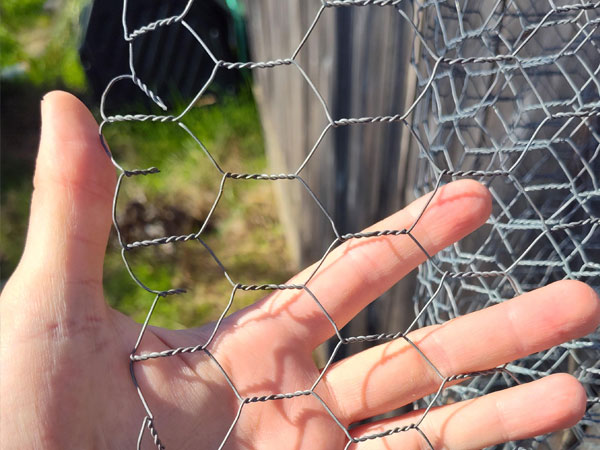
Chicken fences are an essential tool for poultry farmers to protect their poultry, prevent escapes, and prevent intrusion by foreign animals. Choosing the right mesh size is crucial for ensuring both chicken safety and fence durability. Mesh that is too large may allow small animals to enter, while mesh that is too small will affect ventilation and lighting, and may even cause injury to the chickens.
The Impact of Mesh Size on Chickens: The size of the mesh directly affects the chickens' living space and comfort. For adult chickens, a mesh size of 2.5 to 3 cm is generally recommended. This size prevents the chickens' heads from protruding, thus avoiding escape or head injuries. At the same time, this mesh size is large enough so that the chickens' feathers and claws will not get caught in the mesh, reducing the risk of injury.
The Impact of Mesh Size on Ventilation and Lighting: The mesh size of the fence also affects ventilation and lighting inside the chicken house. Mesh that is too large may allow too much wind to enter, affecting the chickens' comfort, especially in cold weather. Mesh that is too small will restrict airflow, potentially leading to excessive humidity inside the chicken house, which can negatively impact the chickens' health. In addition, mesh size also affects lighting; mesh that is too small may block sunlight, affecting chicken growth, development, and egg production.
The Impact of Mesh Size on Fence Durability
The mesh size of a fence is also related to its durability. Larger meshes may make the fence easier for animals to tear or damage, while smaller meshes provide better protection and extend the fence's lifespan. However, meshes that are too small may make the fence too fragile, easily deformed or damaged by wind and rain.
The mesh size of a fence is also related to its durability. Larger meshes may make the fence easier for animals to tear or damage, while smaller meshes provide better protection and extend the fence's lifespan. However, meshes that are too small may make the fence too fragile, easily deformed or damaged by wind and rain.
Choosing the Appropriate Mesh Size
When choosing the mesh size for chicken fences, farmers need to consider the breed, age, climate conditions, and the design of the chicken house. Generally, for adult chickens, a mesh size of 2.5 to 3 centimeters is an ideal choice, ensuring the chickens' safety while meeting their ventilation and lighting needs. For chicks or smaller breeds, smaller meshes may be necessary to prevent escape and protect them from predators.
When choosing the mesh size for chicken fences, farmers need to consider the breed, age, climate conditions, and the design of the chicken house. Generally, for adult chickens, a mesh size of 2.5 to 3 centimeters is an ideal choice, ensuring the chickens' safety while meeting their ventilation and lighting needs. For chicks or smaller breeds, smaller meshes may be necessary to prevent escape and protect them from predators.
Choosing the appropriate mesh size for chicken fences is a matter that requires comprehensive consideration. It not only relates to the safety and health of the chickens, but also affects the durability and economic efficiency of the fence. Farmers should choose the most suitable mesh size based on their own circumstances to achieve a balance between economic benefits and animal welfare in chicken farming.
 If the wire diameter of a stainless steel rope mesh is reduced, by how much will its impact resistance and load-bearing capacity decrease?
  Advantages and Application Scenarios of Expanded Metal Mesh
  Why Stainless Steel Mining Screens Rust and How to Treat Them After Rusting
  Gabion protection technology
  What factors should be considered when selecting zinc-steel fencing?
  What are the anti-corrosion processes for framed wire mesh fencing?
  Why are bent-profile guardrails the preferred choice for municipal and industrial park perimeter protection?
  Detailed Procedure for Installing External Wall Insulation Mesh
  What role does hot-dip galvanizing technology play in guardrail products?
  When it comes to balcony safety, it is worth learning more about stainless steel cable mesh fall-prevention netting.
  Understanding the Multifaceted Engineering Value of Stainless Steel Rope Mesh
  How to determine whether manufactured welded wire mesh meets quality standards
  Why is mesh used for wall plastering?
  Four simple steps to teach you how to install wall corner protectors
  How to make the mesh fabric adhere more firmly during external wall insulation?
  4 Practical Tips for Buying Fiberglass Mesh
  How to Choose Chain-Link Mesh
  Five Key Reasons to Choose Stainless Steel Rope Mesh: Reliability and Cost-Effectiveness
  How can gabion mesh be applied in complex terrain?
  How much do you know about the tensile strength and elongation of Gabion mesh?