
What is the difference between alkali-resistant fiberglass mesh and fiberglass mesh fabric?
2026-04-17
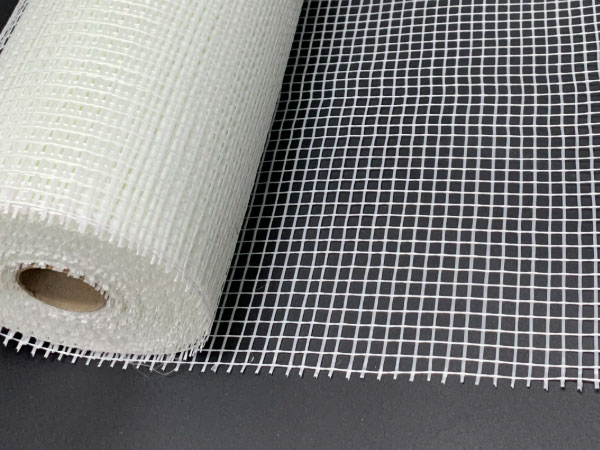
1. Different Definitions
Fiberglass mesh fabric is a series of fiberglass mesh fabric products woven from medium-alkali or alkali-free fiberglass yarn and coated with an alkali-resistant polymer emulsion. Alkali-resistant fiberglass mesh fabric is made from medium-alkali or alkali-free woven fiberglass fabric as a base, treated with an alkali-resistant coating. This product has high strength, good adhesion, excellent conformability, and excellent positioning, and is widely used in wall reinforcement, external wall insulation, and roof waterproofing.
2. Different Functions
Alkali-resistant fiberglass mesh fabric is a reinforcing material for the surface layer of external wall insulation. Its main functions are to improve the mechanical strength of the surface layer, ensure the continuity of the surface layer's resistance, disperse the shrinkage pressure and insulation stress of the surface layer, avoid stress concentration, and resist surface cracking caused by changes in temperature and humidity and accidental impacts.
External wall insulation mesh fabric is a new type of alkali-resistant product made from medium-alkali or alkali-free fiberglass yarn woven into a fiberglass mesh fabric as the base material, then coated with an acrylic copolymer liquid and dried. This product features stable structure, high strength, good alkali resistance, corrosion resistance, and crack resistance, providing optimal reinforcement. It is also simple and easy to install.
3. Different Characteristics
Fiberglass mesh exhibits good chemical stability. It is alkali-resistant, acid-resistant, water-resistant, resistant to cement corrosion, and resistant to other chemical corrosion; it has strong adhesion to resin and is easily soluble in styrene, etc. It boasts high strength, high modulus, and light weight. It offers good dimensional stability, is stiff, flat, not easily shrinking or deforming, and has excellent positioning properties. It has good impact resistance. It is mildew-proof and insect-proof. It provides fire resistance, thermal insulation, sound insulation, and electrical insulation.
Alkali-resistant glass fiber, compared to ordinary alkali-free and medium-alkali glass fiber, has significant advantages: excellent alkali resistance, high tensile strength, and extremely strong corrosion resistance in cement and other strongly alkaline media, making it an irreplaceable reinforcing material in glass fiber reinforced cement products.
Alkali-resistant fiberglass mesh is made from medium-alkali and alkali-free fiberglass mesh as the base material and post-treated with acrylic copolymer liquid. This mesh has high strength, excellent alkali and acid resistance, strong adhesion to resin, easy solubility in styrene, and excellent stiffness and positioning. It is mainly used as a reinforcing material for cement, plastics, asphalt, roofing and walls.
Fiberglass mesh fabric is a series of fiberglass mesh fabric products woven from medium-alkali or alkali-free fiberglass yarn and coated with an alkali-resistant polymer emulsion. Alkali-resistant fiberglass mesh fabric is made from medium-alkali or alkali-free woven fiberglass fabric as a base, treated with an alkali-resistant coating. This product has high strength, good adhesion, excellent conformability, and excellent positioning, and is widely used in wall reinforcement, external wall insulation, and roof waterproofing.
2. Different Functions
Alkali-resistant fiberglass mesh fabric is a reinforcing material for the surface layer of external wall insulation. Its main functions are to improve the mechanical strength of the surface layer, ensure the continuity of the surface layer's resistance, disperse the shrinkage pressure and insulation stress of the surface layer, avoid stress concentration, and resist surface cracking caused by changes in temperature and humidity and accidental impacts.
External wall insulation mesh fabric is a new type of alkali-resistant product made from medium-alkali or alkali-free fiberglass yarn woven into a fiberglass mesh fabric as the base material, then coated with an acrylic copolymer liquid and dried. This product features stable structure, high strength, good alkali resistance, corrosion resistance, and crack resistance, providing optimal reinforcement. It is also simple and easy to install.
3. Different Characteristics
Fiberglass mesh exhibits good chemical stability. It is alkali-resistant, acid-resistant, water-resistant, resistant to cement corrosion, and resistant to other chemical corrosion; it has strong adhesion to resin and is easily soluble in styrene, etc. It boasts high strength, high modulus, and light weight. It offers good dimensional stability, is stiff, flat, not easily shrinking or deforming, and has excellent positioning properties. It has good impact resistance. It is mildew-proof and insect-proof. It provides fire resistance, thermal insulation, sound insulation, and electrical insulation.
Alkali-resistant glass fiber, compared to ordinary alkali-free and medium-alkali glass fiber, has significant advantages: excellent alkali resistance, high tensile strength, and extremely strong corrosion resistance in cement and other strongly alkaline media, making it an irreplaceable reinforcing material in glass fiber reinforced cement products.
Alkali-resistant fiberglass mesh is made from medium-alkali and alkali-free fiberglass mesh as the base material and post-treated with acrylic copolymer liquid. This mesh has high strength, excellent alkali and acid resistance, strong adhesion to resin, easy solubility in styrene, and excellent stiffness and positioning. It is mainly used as a reinforcing material for cement, plastics, asphalt, roofing and walls.
 If the wire diameter of a stainless steel rope mesh is reduced, by how much will its impact resistance and load-bearing capacity decrease?
  Advantages and Application Scenarios of Expanded Metal Mesh
  Why Stainless Steel Mining Screens Rust and How to Treat Them After Rusting
  Gabion protection technology
  What factors should be considered when selecting zinc-steel fencing?
  What are the anti-corrosion processes for framed wire mesh fencing?
  Why are bent-profile guardrails the preferred choice for municipal and industrial park perimeter protection?
  Detailed Procedure for Installing External Wall Insulation Mesh
  What role does hot-dip galvanizing technology play in guardrail products?
  When it comes to balcony safety, it is worth learning more about stainless steel cable mesh fall-prevention netting.
  Understanding the Multifaceted Engineering Value of Stainless Steel Rope Mesh
  How to determine whether manufactured welded wire mesh meets quality standards
  Why is mesh used for wall plastering?
  Four simple steps to teach you how to install wall corner protectors
  How to make the mesh fabric adhere more firmly during external wall insulation?
  4 Practical Tips for Buying Fiberglass Mesh
  How to Choose Chain-Link Mesh
  Five Key Reasons to Choose Stainless Steel Rope Mesh: Reliability and Cost-Effectiveness
  How can gabion mesh be applied in complex terrain?
  How much do you know about the tensile strength and elongation of Gabion mesh?