
Why do some perforated plates deform?
2026-05-25
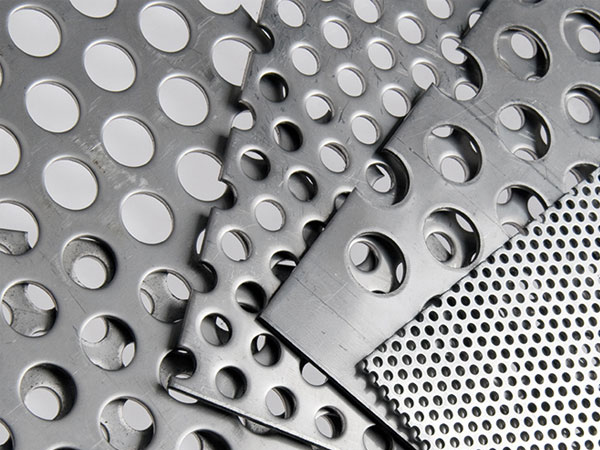
Users familiar with perforated steel sheets are likely aware that various sheet materials deform to varying degrees after processing. Some sheets even become cylindrical after completion. The reasons for this unevenness are often unclear to users. This article will explain why perforated sheets sometimes exhibit unevenness during stamping.
Reason 1: Material-related. Different materials deform to varying degrees after stamping. Stainless steel deforms more significantly and is difficult to flatten. This is because stainless steel has a degree of toughness, making it difficult to achieve the same flatness as before stamping.
Reason 2: Hole diameter and spacing. Smaller holes and denser spacing result in poorer flatness. During CNC stamping, the punch and the stainless steel mesh undergo a stamping process that essentially anneales the stainless steel sheet, hardening it and making it harder to flatten.
Reason 3: Edge finishing of the sheet material also affects flatness. The larger the margin, the worse the flatness, especially for plates with a high opening ratio, large hole diameter, and large margins on all four sides. However, don't worry, we have professional leveling equipment to level the plates as much as possible for customer convenience.
In summary, stainless steel perforated plates require leveling after processing. The "leveling" process uses leveling machines and other equipment to restore the CNC-punched perforated plate to its original flatness. After leveling, the perforated plate is usually cleaned, using lubricants to ensure a cleaner finish. To minimize errors during the perforation process, the processing method, mold selection, and stamping technique must be determined before production to ensure optimal flatness, thus greatly ensuring the smoothness of the CNC punched plate.
When designing the process for perforated decorative panels, we need to consider how to design a reasonable process that offers customers a favorable price and a perfect product. Let's analyze the advantages and disadvantages of each option:
1. Anodizing of aluminum perforated panels: Anodizing is a complex process, involving oxidation followed by coloring. The resulting color is close to the customer's desired bronze, with a glossy finish. However, due to the complexity of the anodizing process, the surface treatment cost for perforated aluminum or steel panels is much higher.
2. Powder coating of aluminum perforated panels: Powder coating is relatively inexpensive, but the cost depends on the powder coating. 1. The amount of uncoated material: Due to minimum order quantity requirements from powder coating manufacturers, spraying 40㎡ of powder coating would require 4-8kg of powder, while the minimum order quantity for powder coating is 200-300kg. This significantly increases the cost of powder coating.
2. Copper perforated plates: These are generally not considered because copper is very expensive and will rust when exposed to air.
3. The last option is stainless steel perforated decorative plates. Based on customer needs, 304 stainless steel is the most suitable choice. From a cost-effectiveness perspective, in terms of aesthetics, and considering its use in high-end hotels, 304 is a better option.
So, is 304 stainless steel the better choice for indoor perforated decorative plates? The answer is no. It depends on the customer's needs, material preferences, price, and, more importantly, the quantity and intended use of the perforated decorative plates.
Reason 1: Material-related. Different materials deform to varying degrees after stamping. Stainless steel deforms more significantly and is difficult to flatten. This is because stainless steel has a degree of toughness, making it difficult to achieve the same flatness as before stamping.
Reason 2: Hole diameter and spacing. Smaller holes and denser spacing result in poorer flatness. During CNC stamping, the punch and the stainless steel mesh undergo a stamping process that essentially anneales the stainless steel sheet, hardening it and making it harder to flatten.
Reason 3: Edge finishing of the sheet material also affects flatness. The larger the margin, the worse the flatness, especially for plates with a high opening ratio, large hole diameter, and large margins on all four sides. However, don't worry, we have professional leveling equipment to level the plates as much as possible for customer convenience.
In summary, stainless steel perforated plates require leveling after processing. The "leveling" process uses leveling machines and other equipment to restore the CNC-punched perforated plate to its original flatness. After leveling, the perforated plate is usually cleaned, using lubricants to ensure a cleaner finish. To minimize errors during the perforation process, the processing method, mold selection, and stamping technique must be determined before production to ensure optimal flatness, thus greatly ensuring the smoothness of the CNC punched plate.
When designing the process for perforated decorative panels, we need to consider how to design a reasonable process that offers customers a favorable price and a perfect product. Let's analyze the advantages and disadvantages of each option:
1. Anodizing of aluminum perforated panels: Anodizing is a complex process, involving oxidation followed by coloring. The resulting color is close to the customer's desired bronze, with a glossy finish. However, due to the complexity of the anodizing process, the surface treatment cost for perforated aluminum or steel panels is much higher.
2. Powder coating of aluminum perforated panels: Powder coating is relatively inexpensive, but the cost depends on the powder coating. 1. The amount of uncoated material: Due to minimum order quantity requirements from powder coating manufacturers, spraying 40㎡ of powder coating would require 4-8kg of powder, while the minimum order quantity for powder coating is 200-300kg. This significantly increases the cost of powder coating.
2. Copper perforated plates: These are generally not considered because copper is very expensive and will rust when exposed to air.
3. The last option is stainless steel perforated decorative plates. Based on customer needs, 304 stainless steel is the most suitable choice. From a cost-effectiveness perspective, in terms of aesthetics, and considering its use in high-end hotels, 304 is a better option.
So, is 304 stainless steel the better choice for indoor perforated decorative plates? The answer is no. It depends on the customer's needs, material preferences, price, and, more importantly, the quantity and intended use of the perforated decorative plates.
 If the wire diameter of a stainless steel rope mesh is reduced, by how much will its impact resistance and load-bearing capacity decrease?
  Advantages and Application Scenarios of Expanded Metal Mesh
  Why Stainless Steel Mining Screens Rust and How to Treat Them After Rusting
  Gabion protection technology
  What factors should be considered when selecting zinc-steel fencing?
  What are the anti-corrosion processes for framed wire mesh fencing?
  Why are bent-profile guardrails the preferred choice for municipal and industrial park perimeter protection?
  Detailed Procedure for Installing External Wall Insulation Mesh
  What role does hot-dip galvanizing technology play in guardrail products?
  When it comes to balcony safety, it is worth learning more about stainless steel cable mesh fall-prevention netting.
  Understanding the Multifaceted Engineering Value of Stainless Steel Rope Mesh
  How to determine whether manufactured welded wire mesh meets quality standards
  Why is mesh used for wall plastering?
  Four simple steps to teach you how to install wall corner protectors
  How to make the mesh fabric adhere more firmly during external wall insulation?
  4 Practical Tips for Buying Fiberglass Mesh
  How to Choose Chain-Link Mesh
  Five Key Reasons to Choose Stainless Steel Rope Mesh: Reliability and Cost-Effectiveness
  How can gabion mesh be applied in complex terrain?
  How much do you know about the tensile strength and elongation of Gabion mesh?