
What are the different surface treatments for wire mesh?
2026-07-06
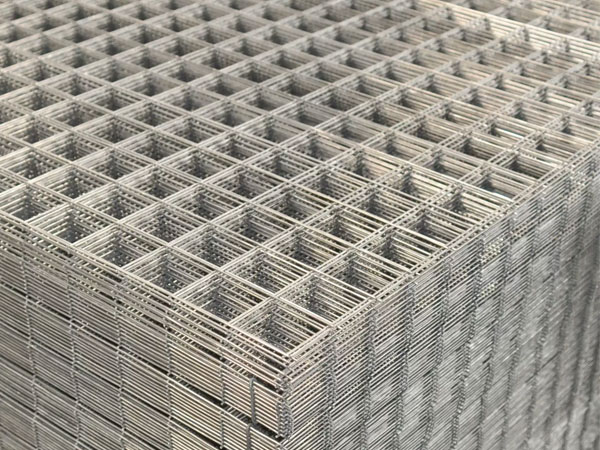
Recently, many customers have inquired about pricing, and I've summarized several common questions they have. Most customers seem to have limited knowledge about wire mesh. Below are some answers:
1. Why does wire mesh need surface treatment?
A: Generally, wire mesh uses high-quality low-carbon steel wire (black), which is aesthetically unappealing and has poor corrosion resistance. These are the two main reasons why surface treatment is necessary.
2. What are the different surface treatment methods for wire mesh?
A: Cold galvanizing, hot-dip galvanizing, dip coating, powder coating, and galvanizing.
3. What are the differences between these treatment methods?
A: 1. First, all these treatment methods significantly increase the corrosion resistance of the wire mesh. Cold galvanizing and hot-dip galvanizing both involve coating the wire mesh with zinc for corrosion protection and aesthetics, but their processes are completely different. Cold galvanizing doesn't offer the same level of corrosion resistance as hot-dip galvanizing, but it's much cheaper.
2. **Dip-coated wire mesh:** This is achieved by heating metal and then evenly spraying plastic powder onto it to form a plastic film, or by immersing the metal part in a heated coating solution and allowing it to cool, after which the plastic coating adheres to the metal surface. The coating thickness is typically 0.7mm-0.8mm. It is commonly used outdoors, offering both aesthetic appeal and corrosion resistance.
3. **Powder-coated wire mesh:** This is also known as electrostatic powder coating. It utilizes an electrostatic generator to charge plastic powder, which adheres to the metal surface. After baking at 180-220℃, the powder melts and adheres to the metal surface. Powder-coated products are often used for indoor enclosures, producing a matte or semi-gloss finish. Powder coating powders mainly include acrylic and polyester powders. The coating thickness is typically 0.1mm-0.2mm, making it suitable for indoor use.
4. **Chromium plating:** Chromium plating has high hardness. Depending on the plating solution composition and process conditions, its hardness can vary widely within the range of 400-1200 HV. Chromium plating exhibits good heat resistance; its gloss and hardness remain largely unchanged below 500℃. Oxidation and discoloration begin above 500℃, and hardness starts to decrease above 700℃. Chromium plating also boasts a low coefficient of friction, particularly its dry friction coefficient, which is the lowest among all metals. Therefore, chromium plating offers excellent wear resistance. The appearance of chromium-plated wire mesh is comparable to that of stainless steel wire mesh.
1. Why does wire mesh need surface treatment?
A: Generally, wire mesh uses high-quality low-carbon steel wire (black), which is aesthetically unappealing and has poor corrosion resistance. These are the two main reasons why surface treatment is necessary.
2. What are the different surface treatment methods for wire mesh?
A: Cold galvanizing, hot-dip galvanizing, dip coating, powder coating, and galvanizing.
3. What are the differences between these treatment methods?
A: 1. First, all these treatment methods significantly increase the corrosion resistance of the wire mesh. Cold galvanizing and hot-dip galvanizing both involve coating the wire mesh with zinc for corrosion protection and aesthetics, but their processes are completely different. Cold galvanizing doesn't offer the same level of corrosion resistance as hot-dip galvanizing, but it's much cheaper.
2. **Dip-coated wire mesh:** This is achieved by heating metal and then evenly spraying plastic powder onto it to form a plastic film, or by immersing the metal part in a heated coating solution and allowing it to cool, after which the plastic coating adheres to the metal surface. The coating thickness is typically 0.7mm-0.8mm. It is commonly used outdoors, offering both aesthetic appeal and corrosion resistance.
3. **Powder-coated wire mesh:** This is also known as electrostatic powder coating. It utilizes an electrostatic generator to charge plastic powder, which adheres to the metal surface. After baking at 180-220℃, the powder melts and adheres to the metal surface. Powder-coated products are often used for indoor enclosures, producing a matte or semi-gloss finish. Powder coating powders mainly include acrylic and polyester powders. The coating thickness is typically 0.1mm-0.2mm, making it suitable for indoor use.
4. **Chromium plating:** Chromium plating has high hardness. Depending on the plating solution composition and process conditions, its hardness can vary widely within the range of 400-1200 HV. Chromium plating exhibits good heat resistance; its gloss and hardness remain largely unchanged below 500℃. Oxidation and discoloration begin above 500℃, and hardness starts to decrease above 700℃. Chromium plating also boasts a low coefficient of friction, particularly its dry friction coefficient, which is the lowest among all metals. Therefore, chromium plating offers excellent wear resistance. The appearance of chromium-plated wire mesh is comparable to that of stainless steel wire mesh.
 If the wire diameter of a stainless steel rope mesh is reduced, by how much will its impact resistance and load-bearing capacity decrease?
  Advantages and Application Scenarios of Expanded Metal Mesh
  Why Stainless Steel Mining Screens Rust and How to Treat Them After Rusting
  Gabion protection technology
  What factors should be considered when selecting zinc-steel fencing?
  What are the anti-corrosion processes for framed wire mesh fencing?
  Why are bent-profile guardrails the preferred choice for municipal and industrial park perimeter protection?
  Detailed Procedure for Installing External Wall Insulation Mesh
  What role does hot-dip galvanizing technology play in guardrail products?
  When it comes to balcony safety, it is worth learning more about stainless steel cable mesh fall-prevention netting.
  Understanding the Multifaceted Engineering Value of Stainless Steel Rope Mesh
  How to determine whether manufactured welded wire mesh meets quality standards
  Why is mesh used for wall plastering?
  Four simple steps to teach you how to install wall corner protectors
  How to make the mesh fabric adhere more firmly during external wall insulation?
  4 Practical Tips for Buying Fiberglass Mesh
  How to Choose Chain-Link Mesh
  Five Key Reasons to Choose Stainless Steel Rope Mesh: Reliability and Cost-Effectiveness
  How can gabion mesh be applied in complex terrain?
  How much do you know about the tensile strength and elongation of Gabion mesh?