
What are the characteristics of microporous perforated mesh in the filtration industry?
2026-07-16
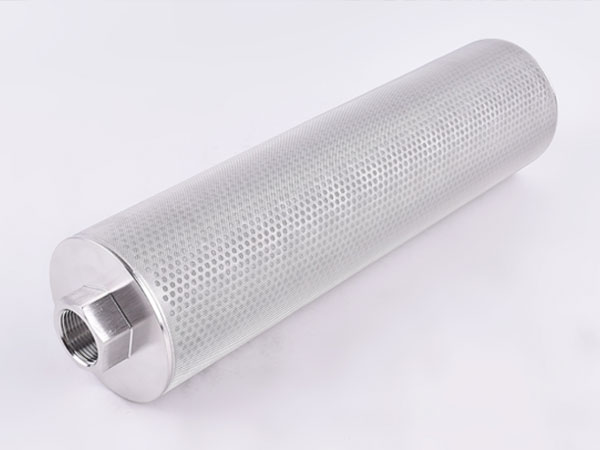
With the continuous development of industrial manufacturing technology, various industries are placing higher demands on the precision, stability, and service life of filtration systems. While traditional filter materials can meet some basic filtration needs, they often face problems such as insufficient strength, easy clogging, and unstable filtration performance under high-precision, high-pressure, and complex working environments.
Microperforated metal sheets, as a precision metal filter material, have gradually become an important choice in the filtration industry due to their special processing method and excellent structural properties. They not only achieve precise filtration but also possess good mechanical strength and a long service life, and are widely used in liquid filtration, gas filtration, oil filtration, and industrial equipment filtration.
How do microperforated metal sheets achieve precision filtration?
Microperforated metal sheets are metal mesh products formed by processing a large number of uniformly arranged small holes on the surface of a metal sheet using precision stamping technology. Compared with ordinary perforated sheets, microperforated metal sheets have smaller pore diameters and higher processing precision, allowing for the design of different pore diameters, pore spacing, and opening arrangements to meet various filtration requirements.
During the filtration process, uniformly distributed micropores effectively control the passage of impurities in the filter medium, resulting in more stable filtration performance. Compared to some traditional woven filter screens, where the mesh size may not be perfectly uniform due to the interlacing of metal wires during weaving, micro-perforated mesh, precisely processed using molds, provides more stable filtration accuracy.
This characteristic makes it particularly suitable for applications requiring high filtration efficiency, such as hydraulic systems, fuel filtration equipment, chemical production equipment, and precision mechanical filtration systems.
What are the advantages of micro-perforated mesh compared to ordinary filter screens?
The biggest advantage of micro-perforated mesh lies in its overall structural stability.
Ordinary woven mesh is mainly formed by interlacing metal wires. While it has good flexibility, under long-term use, if subjected to significant pressure or frequent impacts, it may experience mesh deformation and wire breakage.
Micro-perforated mesh, on the other hand, is processed from a single sheet of metal, resulting in greater integrity and no wire connection points. Therefore, it has higher pressure resistance and impact resistance. In industrial filtration environments, even when faced with high-speed fluid impacts or pressure changes, it maintains a stable structure and is less prone to deformation. This characteristic allows microporous perforated mesh to be used not only as an independent filter element but also frequently as a support layer for other filter materials, improving the stability and lifespan of the entire filtration system.
Why are microporous perforated meshes more suitable for long-term filtration applications?
Clogging and maintenance costs are always a concern for users during the long-term operation of filtration equipment. Microporous perforated meshes have a smooth surface and lack the complex cross-structure of traditional woven meshes, making it less likely for impurities to become trapped inside the mesh during filtration.
After the equipment has been running for a period of time, the filtration performance of microporous perforated meshes can be restored through cleaning methods, such as high-pressure water washing, ultrasonic cleaning, or professional cleaning. Compared to some disposable filter materials, microporous perforated meshes can be reused, effectively reducing replacement costs during long-term equipment operation.
Furthermore, the appropriate metal material can be selected for microporous perforated meshes depending on the working environment. For example, carbon steel or galvanized steel can be used in ordinary industrial environments, while stainless steel microporous perforated meshes are typically used in fields with high corrosion resistance requirements, such as chemical, food, and pharmaceutical industries, to ensure long-term stable operation of the product.
Applications of Microporous Perforated Metal Mesh in the Filtration Industry
Due to its high-precision filtration capabilities and excellent structural strength, microporous perforated metal mesh is currently used in numerous industrial sectors.
In the petroleum and chemical industry, microporous perforated metal mesh is commonly used for filtering lubricating oils, fuels, and various chemical liquids, helping to remove impurities generated during production and improving equipment operational stability.
In the machinery manufacturing industry, microporous perforated metal mesh can be used for hydraulic system filtration, equipment protection filtration, and industrial oil filtration, reducing the entry of impurities into critical components and thus extending equipment lifespan.
In the food, beverage, and pharmaceutical industries, where production environments have high requirements for hygiene and filtration precision, stainless steel microporous perforated metal mesh, with its corrosion resistance and ease of cleaning, is widely used in the filtration stages of production equipment.
Furthermore, in the water treatment industry, microporous perforated metal mesh is also used in industrial circulating water filtration, wastewater treatment, and precision filtration equipment, providing reliable filtration solutions for water resource treatment.
What Factors Should Be Considered When Selecting Microporous Perforated Metal Mesh?
Different filtration applications have different requirements for microporous perforated metal mesh; therefore, product selection needs to be based on the actual usage environment. Pore size is a crucial factor affecting filtration efficiency. Different filter media and impurity sizes require matching pore sizes. If the pore size is too large, ideal filtration may not be achieved; if the pore size is too small, flow rate may be affected.
Material selection is equally important. For ordinary environments, economical carbon steel or galvanized steel can be chosen; however, for high-temperature, high-humidity, or corrosive environments, stainless steel typically offers a longer service life.
Furthermore, sheet thickness, porosity, and overall dimensions also affect filtration performance, requiring rational design based on equipment structure and usage requirements.
Conclusion
Microporous perforated mesh, with its precise pore size control, stable structural performance, good corrosion resistance, and reusability, has become an important material in modern industrial filtration.
Compared to traditional filter materials, microporous perforated mesh not only provides more stable filtration but also meets the long-term usage requirements of high-pressure, high-temperature, and complex industrial environments.
With the development of industrial automation and precision manufacturing, the requirements for material performance in filtration systems will continue to increase. In the future, microporous perforated mesh will play an important role in more fields such as petroleum, chemical, machinery manufacturing, food processing, and water treatment, providing more reliable and efficient filtration solutions for industrial production.
Microperforated metal sheets, as a precision metal filter material, have gradually become an important choice in the filtration industry due to their special processing method and excellent structural properties. They not only achieve precise filtration but also possess good mechanical strength and a long service life, and are widely used in liquid filtration, gas filtration, oil filtration, and industrial equipment filtration.
How do microperforated metal sheets achieve precision filtration?
Microperforated metal sheets are metal mesh products formed by processing a large number of uniformly arranged small holes on the surface of a metal sheet using precision stamping technology. Compared with ordinary perforated sheets, microperforated metal sheets have smaller pore diameters and higher processing precision, allowing for the design of different pore diameters, pore spacing, and opening arrangements to meet various filtration requirements.
During the filtration process, uniformly distributed micropores effectively control the passage of impurities in the filter medium, resulting in more stable filtration performance. Compared to some traditional woven filter screens, where the mesh size may not be perfectly uniform due to the interlacing of metal wires during weaving, micro-perforated mesh, precisely processed using molds, provides more stable filtration accuracy.
This characteristic makes it particularly suitable for applications requiring high filtration efficiency, such as hydraulic systems, fuel filtration equipment, chemical production equipment, and precision mechanical filtration systems.
What are the advantages of micro-perforated mesh compared to ordinary filter screens?
The biggest advantage of micro-perforated mesh lies in its overall structural stability.
Ordinary woven mesh is mainly formed by interlacing metal wires. While it has good flexibility, under long-term use, if subjected to significant pressure or frequent impacts, it may experience mesh deformation and wire breakage.
Micro-perforated mesh, on the other hand, is processed from a single sheet of metal, resulting in greater integrity and no wire connection points. Therefore, it has higher pressure resistance and impact resistance. In industrial filtration environments, even when faced with high-speed fluid impacts or pressure changes, it maintains a stable structure and is less prone to deformation. This characteristic allows microporous perforated mesh to be used not only as an independent filter element but also frequently as a support layer for other filter materials, improving the stability and lifespan of the entire filtration system.
Why are microporous perforated meshes more suitable for long-term filtration applications?
Clogging and maintenance costs are always a concern for users during the long-term operation of filtration equipment. Microporous perforated meshes have a smooth surface and lack the complex cross-structure of traditional woven meshes, making it less likely for impurities to become trapped inside the mesh during filtration.
After the equipment has been running for a period of time, the filtration performance of microporous perforated meshes can be restored through cleaning methods, such as high-pressure water washing, ultrasonic cleaning, or professional cleaning. Compared to some disposable filter materials, microporous perforated meshes can be reused, effectively reducing replacement costs during long-term equipment operation.
Furthermore, the appropriate metal material can be selected for microporous perforated meshes depending on the working environment. For example, carbon steel or galvanized steel can be used in ordinary industrial environments, while stainless steel microporous perforated meshes are typically used in fields with high corrosion resistance requirements, such as chemical, food, and pharmaceutical industries, to ensure long-term stable operation of the product.
Applications of Microporous Perforated Metal Mesh in the Filtration Industry
Due to its high-precision filtration capabilities and excellent structural strength, microporous perforated metal mesh is currently used in numerous industrial sectors.
In the petroleum and chemical industry, microporous perforated metal mesh is commonly used for filtering lubricating oils, fuels, and various chemical liquids, helping to remove impurities generated during production and improving equipment operational stability.
In the machinery manufacturing industry, microporous perforated metal mesh can be used for hydraulic system filtration, equipment protection filtration, and industrial oil filtration, reducing the entry of impurities into critical components and thus extending equipment lifespan.
In the food, beverage, and pharmaceutical industries, where production environments have high requirements for hygiene and filtration precision, stainless steel microporous perforated metal mesh, with its corrosion resistance and ease of cleaning, is widely used in the filtration stages of production equipment.
Furthermore, in the water treatment industry, microporous perforated metal mesh is also used in industrial circulating water filtration, wastewater treatment, and precision filtration equipment, providing reliable filtration solutions for water resource treatment.
What Factors Should Be Considered When Selecting Microporous Perforated Metal Mesh?
Different filtration applications have different requirements for microporous perforated metal mesh; therefore, product selection needs to be based on the actual usage environment. Pore size is a crucial factor affecting filtration efficiency. Different filter media and impurity sizes require matching pore sizes. If the pore size is too large, ideal filtration may not be achieved; if the pore size is too small, flow rate may be affected.
Material selection is equally important. For ordinary environments, economical carbon steel or galvanized steel can be chosen; however, for high-temperature, high-humidity, or corrosive environments, stainless steel typically offers a longer service life.
Furthermore, sheet thickness, porosity, and overall dimensions also affect filtration performance, requiring rational design based on equipment structure and usage requirements.
Conclusion
Microporous perforated mesh, with its precise pore size control, stable structural performance, good corrosion resistance, and reusability, has become an important material in modern industrial filtration.
Compared to traditional filter materials, microporous perforated mesh not only provides more stable filtration but also meets the long-term usage requirements of high-pressure, high-temperature, and complex industrial environments.
With the development of industrial automation and precision manufacturing, the requirements for material performance in filtration systems will continue to increase. In the future, microporous perforated mesh will play an important role in more fields such as petroleum, chemical, machinery manufacturing, food processing, and water treatment, providing more reliable and efficient filtration solutions for industrial production.
 If the wire diameter of a stainless steel rope mesh is reduced, by how much will its impact resistance and load-bearing capacity decrease?
  Advantages and Application Scenarios of Expanded Metal Mesh
  Why Stainless Steel Mining Screens Rust and How to Treat Them After Rusting
  Gabion protection technology
  What factors should be considered when selecting zinc-steel fencing?
  What are the anti-corrosion processes for framed wire mesh fencing?
  Why are bent-profile guardrails the preferred choice for municipal and industrial park perimeter protection?
  Detailed Procedure for Installing External Wall Insulation Mesh
  What role does hot-dip galvanizing technology play in guardrail products?
  When it comes to balcony safety, it is worth learning more about stainless steel cable mesh fall-prevention netting.
  Understanding the Multifaceted Engineering Value of Stainless Steel Rope Mesh
  How to determine whether manufactured welded wire mesh meets quality standards
  Why is mesh used for wall plastering?
  Four simple steps to teach you how to install wall corner protectors
  How to make the mesh fabric adhere more firmly during external wall insulation?
  4 Practical Tips for Buying Fiberglass Mesh
  How to Choose Chain-Link Mesh
  Five Key Reasons to Choose Stainless Steel Rope Mesh: Reliability and Cost-Effectiveness
  How can gabion mesh be applied in complex terrain?
  How much do you know about the tensile strength and elongation of Gabion mesh?