
Under what circumstances should rubber screens be used for mine screening?
2026-07-20
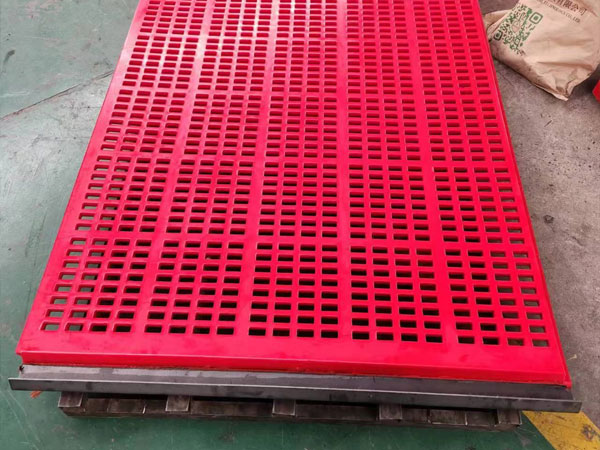
Rubber screens are more suitable for mine screening in the following situations:
**Material Characteristics:**
**High Material Hardness and Large Particle Size:** In mining operations, ores with high hardness and large particle size experience significant wear and impact on the screen. Rubber screens are made of high-quality rubber and undergo special processing, resulting in excellent wear resistance and impact resistance, effectively extending the screen's service life.
**High Material Hardness and Large Particle Size:** In mining operations, ores with high hardness and large particle size experience significant wear and impact on the screen. Rubber screens are made of high-quality rubber and undergo special processing, resulting in excellent wear resistance and impact resistance, effectively extending the screen's service life.
**Moist or Sticky Materials:** For moist or sticky ores, the rubber screen surface has a certain degree of elasticity and toughness, effectively preventing ore clogging and ensuring the continuity and stability of screening operations. The screen openings also have relaxation characteristics, meaning the aperture size undergoes small periodic changes under external force, and the inverted conical shape of the openings further enhances their resistance to clogging.
**Working Environment:**
**High Noise Requirements:** Rubber screens operate with low noise. Field measurements show that compared to metal screens, screening machines using wear-resistant rubber screens can reduce noise by 5-20 decibels, creating a quiet and clean working environment in the workshop.
**High Noise Requirements:** Rubber screens operate with low noise. Field measurements show that compared to metal screens, screening machines using wear-resistant rubber screens can reduce noise by 5-20 decibels, creating a quiet and clean working environment in the workshop.
**Working Environment:** Corrosive Environment: Mining operations frequently involve various chemicals and corrosive media. Rubber screens are resistant to chemical corrosion and rust, ensuring safe and stable screening operations.
Screening Efficiency
High Screening Accuracy Requirements: The screen openings of rubber screens are formed in a single stamping process using specialized molding tools, resulting in precise dimensions and high screening accuracy. It can accurately separate ores of different particle sizes, facilitating subsequent processing.
Improved Screening Efficiency Needs: Rubber screens have excellent self-cleaning properties, preventing ore from clogging the screen openings and thus improving screening efficiency. It can screen various materials ranging from 0.1mm to 170mm, with neither dry nor wet screening affecting efficiency.
Equipment and Costs
Reduced Equipment Load: Rubber screens have a low specific gravity; a 1 square meter 15mm thick screen plate weighs less than 15kg, reducing the weight of the equipment itself and consequently lowering the energy consumption of the screening machine, thus reducing operating costs and extending equipment lifespan.
Reduced Usage Costs: Rubber screens are easy to install and maintain, and replacement is more convenient. Its excellent wear resistance greatly reduces maintenance workload, decreases the frequency of maintenance and losses caused by maintenance downtime, thereby reducing the company's operating costs.
 If the wire diameter of a stainless steel rope mesh is reduced, by how much will its impact resistance and load-bearing capacity decrease?
  Advantages and Application Scenarios of Expanded Metal Mesh
  Why Stainless Steel Mining Screens Rust and How to Treat Them After Rusting
  Gabion protection technology
  What factors should be considered when selecting zinc-steel fencing?
  What are the anti-corrosion processes for framed wire mesh fencing?
  Why are bent-profile guardrails the preferred choice for municipal and industrial park perimeter protection?
  Detailed Procedure for Installing External Wall Insulation Mesh
  What role does hot-dip galvanizing technology play in guardrail products?
  When it comes to balcony safety, it is worth learning more about stainless steel cable mesh fall-prevention netting.
  Understanding the Multifaceted Engineering Value of Stainless Steel Rope Mesh
  How to determine whether manufactured welded wire mesh meets quality standards
  Why is mesh used for wall plastering?
  Four simple steps to teach you how to install wall corner protectors
  How to make the mesh fabric adhere more firmly during external wall insulation?
  4 Practical Tips for Buying Fiberglass Mesh
  How to Choose Chain-Link Mesh
  Five Key Reasons to Choose Stainless Steel Rope Mesh: Reliability and Cost-Effectiveness
  How can gabion mesh be applied in complex terrain?
  How much do you know about the tensile strength and elongation of Gabion mesh?