
Which industries are suitable for manganese steel wire mesh?
2026-07-23
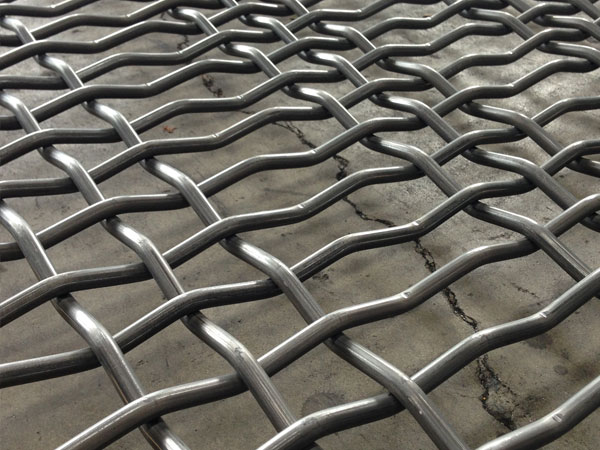
Manganese steel screens are primarily used in harsh working environments involving impact, compression, and material abrasion. The main form of damage is wear, including partial fracture and deformation. Wear is classified into three types: frictional wear during contact and movement of metal parts; abrasive wear from impacts with other metals or non-metals; and erosive wear from contact with flowing gases or liquids. The wear resistance of wear-resistant steel ore screens depends on the material itself, and its wear resistance varies under different working conditions. Both the material itself and the working conditions determine its wear resistance. Cast wear-resistant steel and wear-resistant steel are mainly austenitic manganese steel. Under certain conditions, low-alloy steel ore screens with appropriate heat treatment also exhibit good performance. Graphite steel is used for lubricated friction working conditions.
Manganese steel screens are particularly suitable for impact abrasive wear and high-stress grinding abrasive wear conditions. It is commonly used in the manufacture of impact-resistant and wear-resistant castings such as ball mill liners, hammer crusher hammers, jaw crusher jaw plates, cone crusher grinding walls, crushing walls, excavator bucket teeth, bucket walls, railway turnouts, tractor and tank track plates. High manganese steel ore screens are also used in bulletproof steel plates, safety steel plates, etc. High manganese steel ore screens are a typical wear-resistant steel, with a casting microstructure of austenite plus carbides. After water quenching at about 1000°C, the microstructure transforms into single-phase austenite or austenite with a small amount of carbides, and the toughness is improved. Therefore, this type of ore screen is called water-hardened. The most important characteristic of high manganese steel ore screens is that under strong impact and extrusion conditions, the surface layer rapidly undergoes work hardening, allowing it to maintain the good toughness and plasticity of austenite in the core, while the hardened layer has excellent wear resistance. This is unmatched by other materials. However, the wear resistance of high manganese steel ore screens only shows its superiority under conditions sufficient to form work hardening; under other conditions, it is very poor. Standard Mn13 high-manganese steel ore screens, also known as Hadfield steel, were invented by Hadfield in the UK in 1882. Relevant national and international standards are as follows. Typical Mn17 wear-resistant high-manganese steel ore screens are based on Mn13 steel, with increased manganese content, improved austenite stability, and prevention of carbide precipitation, thereby improving the strength and plasticity of the ore screen steel, as well as its work hardening ability and wear resistance.
Manganese steel ore screens are mainly used to withstand harsh working conditions such as impact, extrusion, and material abrasion. Their damage forms are mainly wear, localized fracture, and deformation. Wear is classified into three types: frictional wear caused by the movement between metal parts; abrasive wear caused by the impact of other metals or non-metallic materials on the metal surface; and erosive wear caused by the contact of flowing gas or liquid with the metal. The wear resistance of wear-resistant steel ore screens depends on the material itself, and the wear resistance of wear-resistant steel ore screens varies under different working conditions. The material itself and working conditions jointly determine its wear resistance. Cast wear-resistant steel and wear-resistant steel are mainly austenitic manganese steel. Under certain conditions, low-alloy steel ore screens with appropriate heat treatment also perform well. Graphite steel is used for lubrication and friction applications.
Manganese steel screens are particularly suitable for impact abrasive wear and high-stress grinding abrasive wear conditions. It is commonly used in the manufacture of impact-resistant and wear-resistant castings such as ball mill liners, hammer crusher hammers, jaw crusher jaw plates, cone crusher grinding walls, crushing walls, excavator bucket teeth, bucket walls, railway turnouts, tractor and tank track plates. High manganese steel ore screens are also used in bulletproof steel plates, safety steel plates, etc. High manganese steel ore screens are a typical wear-resistant steel, with a casting microstructure of austenite plus carbides. After water quenching at about 1000°C, the microstructure transforms into single-phase austenite or austenite with a small amount of carbides, and the toughness is improved. Therefore, this type of ore screen is called water-hardened. The most important characteristic of high manganese steel ore screens is that under strong impact and extrusion conditions, the surface layer rapidly undergoes work hardening, allowing it to maintain the good toughness and plasticity of austenite in the core, while the hardened layer has excellent wear resistance. This is unmatched by other materials. However, the wear resistance of high manganese steel ore screens only shows its superiority under conditions sufficient to form work hardening; under other conditions, it is very poor. Standard Mn13 high-manganese steel ore screens, also known as Hadfield steel, were invented by Hadfield in the UK in 1882. Relevant national and international standards are as follows. Typical Mn17 wear-resistant high-manganese steel ore screens are based on Mn13 steel, with increased manganese content, improved austenite stability, and prevention of carbide precipitation, thereby improving the strength and plasticity of the ore screen steel, as well as its work hardening ability and wear resistance.
Manganese steel ore screens are mainly used to withstand harsh working conditions such as impact, extrusion, and material abrasion. Their damage forms are mainly wear, localized fracture, and deformation. Wear is classified into three types: frictional wear caused by the movement between metal parts; abrasive wear caused by the impact of other metals or non-metallic materials on the metal surface; and erosive wear caused by the contact of flowing gas or liquid with the metal. The wear resistance of wear-resistant steel ore screens depends on the material itself, and the wear resistance of wear-resistant steel ore screens varies under different working conditions. The material itself and working conditions jointly determine its wear resistance. Cast wear-resistant steel and wear-resistant steel are mainly austenitic manganese steel. Under certain conditions, low-alloy steel ore screens with appropriate heat treatment also perform well. Graphite steel is used for lubrication and friction applications.
 If the wire diameter of a stainless steel rope mesh is reduced, by how much will its impact resistance and load-bearing capacity decrease?
  Advantages and Application Scenarios of Expanded Metal Mesh
  Why Stainless Steel Mining Screens Rust and How to Treat Them After Rusting
  Gabion protection technology
  What factors should be considered when selecting zinc-steel fencing?
  What are the anti-corrosion processes for framed wire mesh fencing?
  Why are bent-profile guardrails the preferred choice for municipal and industrial park perimeter protection?
  Detailed Procedure for Installing External Wall Insulation Mesh
  What role does hot-dip galvanizing technology play in guardrail products?
  When it comes to balcony safety, it is worth learning more about stainless steel cable mesh fall-prevention netting.
  Understanding the Multifaceted Engineering Value of Stainless Steel Rope Mesh
  How to determine whether manufactured welded wire mesh meets quality standards
  Why is mesh used for wall plastering?
  Four simple steps to teach you how to install wall corner protectors
  How to make the mesh fabric adhere more firmly during external wall insulation?
  4 Practical Tips for Buying Fiberglass Mesh
  How to Choose Chain-Link Mesh
  Five Key Reasons to Choose Stainless Steel Rope Mesh: Reliability and Cost-Effectiveness
  How can gabion mesh be applied in complex terrain?
  How much do you know about the tensile strength and elongation of Gabion mesh?