
How do you determine whether the quality of stainless steel welded wire mesh meets the standards?
2026-08-03
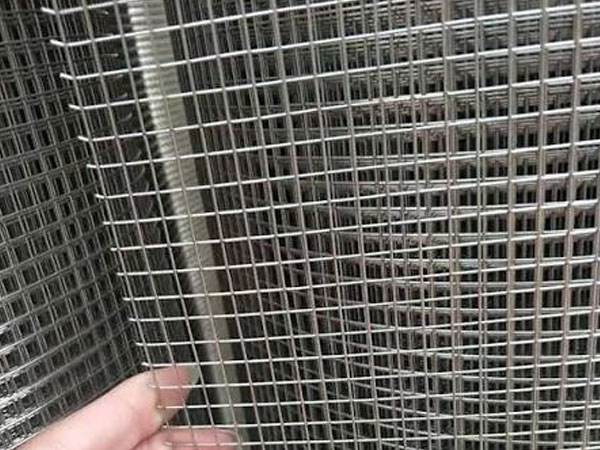
There are many manufacturers of stainless steel welded wire mesh, but product quality varies; some meet standards while others do not. Products lacking quality compliance certificates still find their way onto the market, so how can a buyer determine if the mesh is up to standard? Here are a few key points to consider:
1. **Wire Diameter Tolerance:** The tolerance for the wire diameter should be controlled within 0.02 mm. For example, if purchasing mesh with a nominal wire diameter of 0.89 mm, a micrometer measurement should fall within the 0.87 mm to 0.91 mm range to be considered compliant. While high precision is desirable, perfect control during production is difficult; since the mesh can be manufactured with 0.01 mm precision, a small margin of error is acceptable.
2. **Tensile Strength:** The stainless steel welded wire mesh must have a tensile strength of at least 120 N; otherwise, it is considered substandard. There is no simple field test for this; verification requires professional tools and expert testing, so we will not elaborate on the procedure here.
3. **Edge Protrusion:** To be considered compliant, the wire ends (protrusions) at the edges of the mesh must not exceed 2 mm. While the warp and weft wires must be securely welded at every intersection, achieving a secure weld at the edge requires the weft wires to extend slightly beyond the edge wire; however, this extension must not be excessive. Generally, a protrusion of no more than 2 mm indicates a compliant product. 4. There are also visible characteristics to consider: the mesh openings must be uniform, and the hot-dip galvanized coating on the welded stainless steel mesh must be even to ensure effective corrosion resistance.
The materials used for welded stainless steel mesh in engineering projects vary, including hot-dip galvanized, cold-galvanized, and re-drawn wire varieties. Among these, re-drawn wire mesh is the hardest and presents greater construction challenges compared to the other two types. Hot-dip galvanized welded stainless steel mesh is the easiest to install; it offers better flexibility, lays flat smoothly, and facilitates better adhesion of plaster or mortar.
1. **Wire Diameter Tolerance:** The tolerance for the wire diameter should be controlled within 0.02 mm. For example, if purchasing mesh with a nominal wire diameter of 0.89 mm, a micrometer measurement should fall within the 0.87 mm to 0.91 mm range to be considered compliant. While high precision is desirable, perfect control during production is difficult; since the mesh can be manufactured with 0.01 mm precision, a small margin of error is acceptable.
2. **Tensile Strength:** The stainless steel welded wire mesh must have a tensile strength of at least 120 N; otherwise, it is considered substandard. There is no simple field test for this; verification requires professional tools and expert testing, so we will not elaborate on the procedure here.
3. **Edge Protrusion:** To be considered compliant, the wire ends (protrusions) at the edges of the mesh must not exceed 2 mm. While the warp and weft wires must be securely welded at every intersection, achieving a secure weld at the edge requires the weft wires to extend slightly beyond the edge wire; however, this extension must not be excessive. Generally, a protrusion of no more than 2 mm indicates a compliant product. 4. There are also visible characteristics to consider: the mesh openings must be uniform, and the hot-dip galvanized coating on the welded stainless steel mesh must be even to ensure effective corrosion resistance.
The materials used for welded stainless steel mesh in engineering projects vary, including hot-dip galvanized, cold-galvanized, and re-drawn wire varieties. Among these, re-drawn wire mesh is the hardest and presents greater construction challenges compared to the other two types. Hot-dip galvanized welded stainless steel mesh is the easiest to install; it offers better flexibility, lays flat smoothly, and facilitates better adhesion of plaster or mortar.
 If the wire diameter of a stainless steel rope mesh is reduced, by how much will its impact resistance and load-bearing capacity decrease?
  Advantages and Application Scenarios of Expanded Metal Mesh
  Why Stainless Steel Mining Screens Rust and How to Treat Them After Rusting
  Gabion protection technology
  What factors should be considered when selecting zinc-steel fencing?
  What are the anti-corrosion processes for framed wire mesh fencing?
  Why are bent-profile guardrails the preferred choice for municipal and industrial park perimeter protection?
  Detailed Procedure for Installing External Wall Insulation Mesh
  What role does hot-dip galvanizing technology play in guardrail products?
  When it comes to balcony safety, it is worth learning more about stainless steel cable mesh fall-prevention netting.
  Understanding the Multifaceted Engineering Value of Stainless Steel Rope Mesh
  How to determine whether manufactured welded wire mesh meets quality standards
  Why is mesh used for wall plastering?
  Four simple steps to teach you how to install wall corner protectors
  How to make the mesh fabric adhere more firmly during external wall insulation?
  4 Practical Tips for Buying Fiberglass Mesh
  How to Choose Chain-Link Mesh
  Five Key Reasons to Choose Stainless Steel Rope Mesh: Reliability and Cost-Effectiveness
  How can gabion mesh be applied in complex terrain?
  How much do you know about the tensile strength and elongation of Gabion mesh?