
What are the quality assurance testing standards for GB 304 stainless steel mesh?
2026-08-04
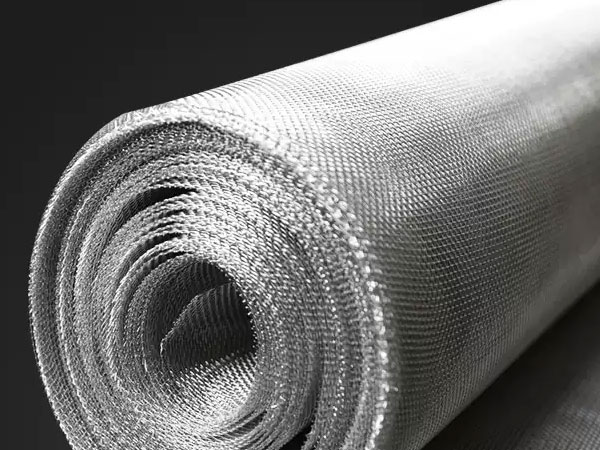
As a professional manufacturer, we produce a wide range of stainless steel mesh products—including those made from GB-standard 304, ASTM-standard 304, and titanium-grade stainless steel—offering complete specifications and accepting orders starting from a single unit. We operate our own factory and can issue invoices even for single-item orders. Here is a brief overview of how we test the quality of our GB-standard 304 stainless steel mesh.
We utilize advanced testing equipment and rigorous quality control systems to provide customers with high-quality products and exceptional service. Our quality testing process for GB-standard 304 stainless steel mesh involves several steps: raw material inspection, where every batch of stainless steel wire undergoes spectral analysis to ensure it meets premium standards—such as correct material composition, low carbon content, and high nickel and chromium levels.
During the warping process on our weaving machines, we ensure that the wire remains free of scratches and friction marks and that the winding reels are smooth and even; this guarantees a clean wire surface without compromising its structural integrity. We carefully select the appropriate weaving machine based on the specific mesh count and wire diameter requirements, while also paying close attention to machine calibration and the maintenance of critical components.
We use alloy analyzers to accurately verify the composition of every roll of mesh; the data is conveniently recorded and printed onto the product label. A 60x magnification microscope is used to inspect mesh aperture specifications. For strict quality standards—such as an aperture tolerance of -0.015mm—any non-compliant products are rejected before packaging. This ensures a customer satisfaction rate exceeding 95% and a 100% factory pass rate.
Airflow testers are used to measure the airflow through the finished mesh products; we can also provide airflow curves at various pressures based on customer requirements. Finally, our aperture analyzers test the mesh opening size, filtration precision range, tensile strength, and elongation in accordance with the ISO 4003 standard, with all data automatically saved and printed.
We utilize advanced testing equipment and rigorous quality control systems to provide customers with high-quality products and exceptional service. Our quality testing process for GB-standard 304 stainless steel mesh involves several steps: raw material inspection, where every batch of stainless steel wire undergoes spectral analysis to ensure it meets premium standards—such as correct material composition, low carbon content, and high nickel and chromium levels.
During the warping process on our weaving machines, we ensure that the wire remains free of scratches and friction marks and that the winding reels are smooth and even; this guarantees a clean wire surface without compromising its structural integrity. We carefully select the appropriate weaving machine based on the specific mesh count and wire diameter requirements, while also paying close attention to machine calibration and the maintenance of critical components.
We use alloy analyzers to accurately verify the composition of every roll of mesh; the data is conveniently recorded and printed onto the product label. A 60x magnification microscope is used to inspect mesh aperture specifications. For strict quality standards—such as an aperture tolerance of -0.015mm—any non-compliant products are rejected before packaging. This ensures a customer satisfaction rate exceeding 95% and a 100% factory pass rate.
Airflow testers are used to measure the airflow through the finished mesh products; we can also provide airflow curves at various pressures based on customer requirements. Finally, our aperture analyzers test the mesh opening size, filtration precision range, tensile strength, and elongation in accordance with the ISO 4003 standard, with all data automatically saved and printed.
 If the wire diameter of a stainless steel rope mesh is reduced, by how much will its impact resistance and load-bearing capacity decrease?
  Advantages and Application Scenarios of Expanded Metal Mesh
  Why Stainless Steel Mining Screens Rust and How to Treat Them After Rusting
  Gabion protection technology
  What factors should be considered when selecting zinc-steel fencing?
  What are the anti-corrosion processes for framed wire mesh fencing?
  Why are bent-profile guardrails the preferred choice for municipal and industrial park perimeter protection?
  Detailed Procedure for Installing External Wall Insulation Mesh
  What role does hot-dip galvanizing technology play in guardrail products?
  When it comes to balcony safety, it is worth learning more about stainless steel cable mesh fall-prevention netting.
  Understanding the Multifaceted Engineering Value of Stainless Steel Rope Mesh
  How to determine whether manufactured welded wire mesh meets quality standards
  Why is mesh used for wall plastering?
  Four simple steps to teach you how to install wall corner protectors
  How to make the mesh fabric adhere more firmly during external wall insulation?
  4 Practical Tips for Buying Fiberglass Mesh
  How to Choose Chain-Link Mesh
  Five Key Reasons to Choose Stainless Steel Rope Mesh: Reliability and Cost-Effectiveness
  How can gabion mesh be applied in complex terrain?
  How much do you know about the tensile strength and elongation of Gabion mesh?