
Different types of welded wire mesh have different uses.
2026-06-25
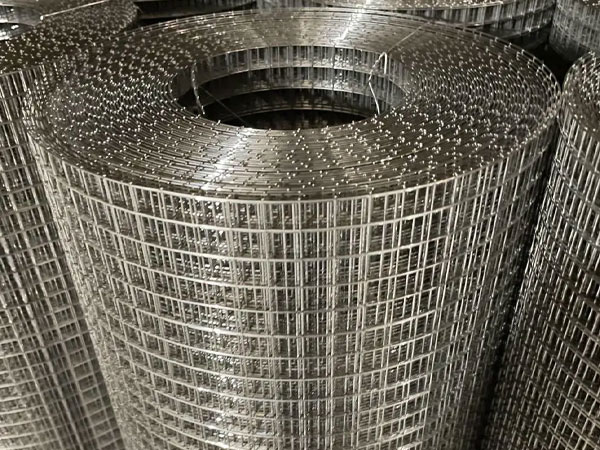
Welded wire mesh is made of high-quality low-carbon steel wire, processed by automated precision machinery through spot welding, and then surface-treated with galvanizing. Produced to standard British specifications, it features a smooth and neat surface, a robust and uniform structure, and excellent overall performance. Even under partial cutting or pressure, it will not loosen. It boasts the strongest corrosion resistance among all iron wire meshes and is one of the most widely used types. Its superior corrosion resistance makes it highly favored in the animal husbandry industry. The smooth and neat surface enhances its appearance and provides a decorative effect, a characteristic that also makes it suitable for the mining industry. Made from low-carbon, high-quality materials, it possesses a unique flexibility not found in ordinary iron wire meshes, ensuring its versatility during use. This allows it to be used in deep processing of hardware, plastering of complex walls, and underground leak and crack prevention. Its lightweight design significantly reduces costs compared to traditional iron wire meshes, making it more economical and cost-effective.
When using hot-dip galvanized steel wire mesh in a high-rise building exterior wall insulation system with facing bricks, the four corners of the mesh are laid within the crack-resistant mortar. This effectively strengthens the crack-resistant protective layer of the exterior wall insulation bricks. The hot-dip galvanized steel wire mesh is then directly fixed to the structure using anchors, transferring the surface load to the base wall. The insulation layer is also effectively protected; when subjected to external forces, damage occurs in the crack-resistant protective layer and is absorbed by it. Due to the excellent bond between the hot-dip galvanized steel wire mesh and the cement crack-resistant mortar, the wire mesh provides a reasonable increase in tensile strength in both the horizontal and vertical directions, greatly improving the strength of the brick-bonded base layer. Therefore, using a hot-dip galvanized steel wire mesh reinforced structure effectively balances crack resistance with the strength requirements of the facing bricks for the base layer, meeting the needs of stability, safety, and durability of the insulation system.
When using hot-dip galvanized steel wire mesh in a high-rise building exterior wall insulation system with facing bricks, the four corners of the mesh are laid within the crack-resistant mortar. This effectively strengthens the crack-resistant protective layer of the exterior wall insulation bricks. The hot-dip galvanized steel wire mesh is then directly fixed to the structure using anchors, transferring the surface load to the base wall. The insulation layer is also effectively protected; when subjected to external forces, damage occurs in the crack-resistant protective layer and is absorbed by it. Due to the excellent bond between the hot-dip galvanized steel wire mesh and the cement crack-resistant mortar, the wire mesh provides a reasonable increase in tensile strength in both the horizontal and vertical directions, greatly improving the strength of the brick-bonded base layer. Therefore, using a hot-dip galvanized steel wire mesh reinforced structure effectively balances crack resistance with the strength requirements of the facing bricks for the base layer, meeting the needs of stability, safety, and durability of the insulation system.
 If the wire diameter of a stainless steel rope mesh is reduced, by how much will its impact resistance and load-bearing capacity decrease?
  Advantages and Application Scenarios of Expanded Metal Mesh
  Why Stainless Steel Mining Screens Rust and How to Treat Them After Rusting
  Gabion protection technology
  What factors should be considered when selecting zinc-steel fencing?
  What are the anti-corrosion processes for framed wire mesh fencing?
  Why are bent-profile guardrails the preferred choice for municipal and industrial park perimeter protection?
  Detailed Procedure for Installing External Wall Insulation Mesh
  What role does hot-dip galvanizing technology play in guardrail products?
  When it comes to balcony safety, it is worth learning more about stainless steel cable mesh fall-prevention netting.
  Understanding the Multifaceted Engineering Value of Stainless Steel Rope Mesh
  How to determine whether manufactured welded wire mesh meets quality standards
  Why is mesh used for wall plastering?
  Four simple steps to teach you how to install wall corner protectors
  How to make the mesh fabric adhere more firmly during external wall insulation?
  4 Practical Tips for Buying Fiberglass Mesh
  How to Choose Chain-Link Mesh
  Five Key Reasons to Choose Stainless Steel Rope Mesh: Reliability and Cost-Effectiveness
  How can gabion mesh be applied in complex terrain?
  How much do you know about the tensile strength and elongation of Gabion mesh?