
How to choose the mesh size of stainless steel mesh
2024-08-28
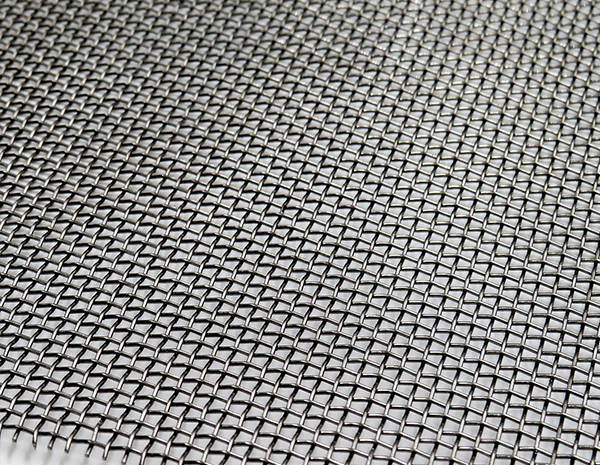
For example, the arrangement of the screen from the plate to the extruder may be 20 mesh/40 mesh/60 mesh, because this arrangement can prevent the screen from being blocked and can "blow" impurities into the openings of the plate.
The aperture of the filter with the same number of meshes is determined by the diameter of the wire and does not have to be exactly the same. For example, a 20-mesh filter made of wire with a row spacing of 24in and a diameter of 0.02in has an opening of 0.01in on each side; while a 20-mesh filter made of wire with a row spacing of 30in and a diameter of 0.01in has a slightly larger opening of 0.04in on each side. This is because the fine wire is not filtered finely enough and is more prone to clogging (1in=25.4mm).
The mesh of most filter screens is woven in a square grid, with the same number of wires in each direction. The Dutch weaving method uses coarse metal wires in the horizontal direction, and the number is even, for example, 32x120 wires/in (1in=25.4mm). The filter mesh stainless steel mat type mesh made by the Dutch weaving method can achieve fine filtering effect without setting parallel screens in the filter equipment.
Steel wire is the most commonly used metal filter material for extruders. Although stainless steel is relatively expensive, it can be used in some PVC production lines or other occasions to avoid rust. Nickel alloy filter mesh is used to avoid corrosion by fluoropolymers or PVDC.
If the finest filter is 80 or more meshes, in order to prevent the filter from being blocked by the rotation of the molten material or large impurities, a coarse filter can be placed in front (such as 20/100/60/20 mesh placement). Because this type of equipment looks the same from both sides, in order to prevent them from being blocked, a symmetrical arrangement method is sometimes used (20 mesh/60 mesh/100 mesh/60 mesh/20 mesh). Generally, the mesh size (or number of wires per inch) of the filter is 20 to 150 or more. A 20-mesh filter is coarse; a 40-60-mesh filter is fine; and a 80-150-mesh filter is very fine. Some processors intentionally install the filter so that the coarse filter first filters the larger particles on the upstream surface. They believe that this method allows more molten material to pass through and causes less decomposition of the material on the upstream surface of the plate.
Steel wire is the most commonly used metal filter material for extruders. Although stainless steel is relatively expensive, it can be used in some PVC production lines or other occasions to avoid rust. Nickel alloy filter mesh is used to avoid corrosion by fluoropolymers or PVDC.
If the finest filter is 80 or more meshes, in order to prevent the filter from being blocked by the rotation of the molten material or large impurities, a coarse filter can be placed in front (such as 20/100/60/20 mesh placement). Because this type of equipment looks the same from both sides, in order to prevent them from being blocked, a symmetrical arrangement method is sometimes used (20 mesh/60 mesh/100 mesh/60 mesh/20 mesh). Generally, the mesh size (or number of wires per inch) of the filter is 20 to 150 or more. A 20-mesh filter is coarse; a 40-60-mesh filter is fine; and a 80-150-mesh filter is very fine. Some processors intentionally install the filter so that the coarse filter first filters the larger particles on the upstream surface. They believe that this method allows more molten material to pass through and causes less decomposition of the material on the upstream surface of the plate.
 If the wire diameter of a stainless steel rope mesh is reduced, by how much will its impact resistance and load-bearing capacity decrease?
  Advantages and Application Scenarios of Expanded Metal Mesh
  Why Stainless Steel Mining Screens Rust and How to Treat Them After Rusting
  Gabion protection technology
  What factors should be considered when selecting zinc-steel fencing?
  What are the anti-corrosion processes for framed wire mesh fencing?
  Why are bent-profile guardrails the preferred choice for municipal and industrial park perimeter protection?
  Detailed Procedure for Installing External Wall Insulation Mesh
  What role does hot-dip galvanizing technology play in guardrail products?
  When it comes to balcony safety, it is worth learning more about stainless steel cable mesh fall-prevention netting.
  Understanding the Multifaceted Engineering Value of Stainless Steel Rope Mesh
  How to determine whether manufactured welded wire mesh meets quality standards
  Why is mesh used for wall plastering?
  Four simple steps to teach you how to install wall corner protectors
  How to make the mesh fabric adhere more firmly during external wall insulation?
  4 Practical Tips for Buying Fiberglass Mesh
  How to Choose Chain-Link Mesh
  Five Key Reasons to Choose Stainless Steel Rope Mesh: Reliability and Cost-Effectiveness
  How can gabion mesh be applied in complex terrain?
  How much do you know about the tensile strength and elongation of Gabion mesh?