
How to Maintain Stainless Steel Mesh
2026-07-30
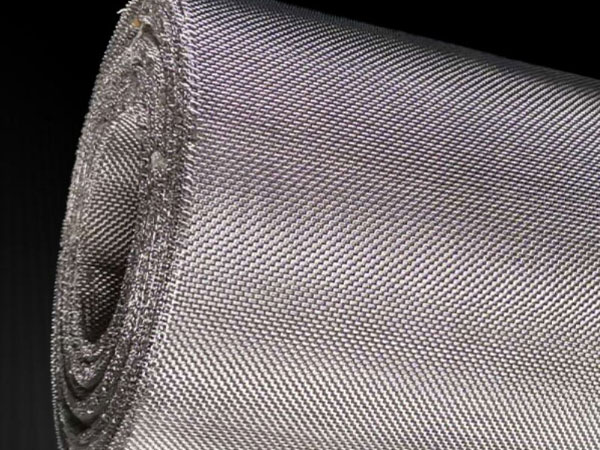
Stainless steel is an integral part of our daily lives, yet many people have limited knowledge of its properties and even less understanding of how to maintain it. Many mistakenly believe that stainless steel never rusts; in reality, it simply possesses excellent corrosion resistance. This resistance stems from the formation of a surface passivation film—a stable oxide layer that forms naturally. While the degree of oxidation varies depending on usage conditions, stainless steel does eventually oxidize—a process commonly known as corrosion.
For dust or easily removable dirt on stainless steel surfaces, use soap, a mild detergent, or warm water. To remove labels or protective films, use warm water and a mild detergent; for adhesive residue, use alcohol or an organic solvent (such as ether or benzene). Clean grease, oil, or lubricant stains with a soft cloth, followed by a neutral detergent, an ammonia solution, or a specialized cleaner. If the surface comes into contact with bleach or acids, rinse immediately with water, then wash with an ammonia solution or a neutral sodium carbonate solution, followed by a final wash with neutral detergent or warm water. Rainbow-like patterns on stainless steel mesh are usually caused by excessive use of detergent or oil; these can be removed by washing with warm water and a neutral detergent.
Rust caused by surface contaminants can generally be removed using 10% nitric acid, an abrasive cleaner, or a specialized cleaning agent. Proper maintenance extends the service life of stainless steel and preserves its clean, bright, and elegant appearance. Weak points in the surface passivation film can trigger localized pitting corrosion, creating small holes; the presence of chloride ions further accelerates this process by forming a highly corrosive solution. Intergranular corrosion and cracking within the metal structure can also damage the passivation film. Therefore, regular cleaning and maintenance are essential to preserve the material's attractive finish and extend its lifespan. When cleaning stainless steel surfaces, take care to avoid scratching; do not use cleaning agents containing bleach or abrasives, nor steel wool or abrasive tools. After cleaning, rinse the surface with clean water to remove any remaining cleaning solution.
For dust or easily removable dirt on stainless steel surfaces, use soap, a mild detergent, or warm water. To remove labels or protective films, use warm water and a mild detergent; for adhesive residue, use alcohol or an organic solvent (such as ether or benzene). Clean grease, oil, or lubricant stains with a soft cloth, followed by a neutral detergent, an ammonia solution, or a specialized cleaner. If the surface comes into contact with bleach or acids, rinse immediately with water, then wash with an ammonia solution or a neutral sodium carbonate solution, followed by a final wash with neutral detergent or warm water. Rainbow-like patterns on stainless steel mesh are usually caused by excessive use of detergent or oil; these can be removed by washing with warm water and a neutral detergent.
Rust caused by surface contaminants can generally be removed using 10% nitric acid, an abrasive cleaner, or a specialized cleaning agent. Proper maintenance extends the service life of stainless steel and preserves its clean, bright, and elegant appearance. Weak points in the surface passivation film can trigger localized pitting corrosion, creating small holes; the presence of chloride ions further accelerates this process by forming a highly corrosive solution. Intergranular corrosion and cracking within the metal structure can also damage the passivation film. Therefore, regular cleaning and maintenance are essential to preserve the material's attractive finish and extend its lifespan. When cleaning stainless steel surfaces, take care to avoid scratching; do not use cleaning agents containing bleach or abrasives, nor steel wool or abrasive tools. After cleaning, rinse the surface with clean water to remove any remaining cleaning solution.
 If the wire diameter of a stainless steel rope mesh is reduced, by how much will its impact resistance and load-bearing capacity decrease?
  Advantages and Application Scenarios of Expanded Metal Mesh
  Why Stainless Steel Mining Screens Rust and How to Treat Them After Rusting
  Gabion protection technology
  What factors should be considered when selecting zinc-steel fencing?
  What are the anti-corrosion processes for framed wire mesh fencing?
  Why are bent-profile guardrails the preferred choice for municipal and industrial park perimeter protection?
  Detailed Procedure for Installing External Wall Insulation Mesh
  What role does hot-dip galvanizing technology play in guardrail products?
  When it comes to balcony safety, it is worth learning more about stainless steel cable mesh fall-prevention netting.
  Understanding the Multifaceted Engineering Value of Stainless Steel Rope Mesh
  How to determine whether manufactured welded wire mesh meets quality standards
  Why is mesh used for wall plastering?
  Four simple steps to teach you how to install wall corner protectors
  How to make the mesh fabric adhere more firmly during external wall insulation?
  4 Practical Tips for Buying Fiberglass Mesh
  How to Choose Chain-Link Mesh
  Five Key Reasons to Choose Stainless Steel Rope Mesh: Reliability and Cost-Effectiveness
  How can gabion mesh be applied in complex terrain?
  How much do you know about the tensile strength and elongation of Gabion mesh?