
Introduction to two methods of weaving netting
2026-08-17
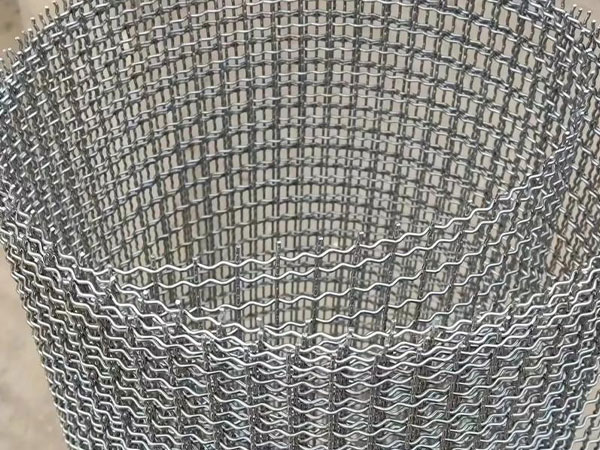
Woven wire mesh refers to a mesh product made by weaving iron wire. According to the shape of its mesh openings, it can be divided into square mesh, rectangular mesh, herringbone mesh, and diamond mesh. According to its manufacturing process, it can be divided into crimped woven mesh and plain woven mesh.
Plain weave and crimped mesh are different. Plain weave is characterized by its flatness, while crimped mesh is characterized by its pattern, with the wires appearing wavy. When walking barefoot on the surface of plain woven and crimped mesh, the difference is very noticeable; plain woven mesh doesn't feel slippery, while crimped mesh does. The surface hardness of plain woven mesh also differs from crimped mesh; plain woven mesh is softer, while crimped mesh is harder. Generally, plain-woven mesh is mostly made with smaller wire diameters, within 0.7 mm, while embossed mesh is mostly made with larger wire diameters, generally between 0.3-0.7 mm and above, with mesh sizes of 5-40 meshes. In many cases, plain-woven and embossed meshes overlap, meaning both can be made, depending on the specific application requirements. For a smooth finish, choose plain-woven; for a firmer finish, choose embossed.
Plain-woven mesh does not undergo embossing; it is woven directly from the wires. Plain-woven mesh is only suitable for products with smaller wire diameters and denser mesh sizes, generally within 1 mm in wire diameter and above 20 meshes. Some specifications of plain-woven mesh can reach 2 mm in wire diameter. Embossed mesh refers to mesh made by first embossing the wires with an embossing wheel before weaving. Embossed mesh has larger wire diameters and mesh sizes than plain-woven mesh, offering more choices.
Crimped woven wire mesh can have a wire diameter ranging from 0.35mm to 16mm, a very wide range. Depending on the wire diameter, the mesh size can be selected from 1mm to 100mm. The wire diameter and mesh size specifications are extremely diverse, making woven wire mesh the most varied of all wire mesh products in terms of specifications and wire diameter/mesh size range. Basically, any specification can be made; the only differences are the simplicity or complexity of production, the time required, the cost, and whether it's reasonable or not. Because of the large number of specifications, woven wire mesh is also the most prone to problems, especially for laypeople. Specialization is key, which is normal. For industry professionals, they can usually judge whether a specification is reasonable or unreasonable just by hearing it. Many customers only provide data without knowing whether it's reasonable or not, and data is very prone to error—mishearing or carelessness can all lead to mistakes. However, unreasonable specifications can still be produced, which is why woven wire mesh is more prone to errors compared to other types of wire mesh. In many cases, this situation arises. We remind our clients that some simply say their clients provided them with this data, and they just follow it, believing that any problems will be the other party's responsibility, adopting a "better safe than sorry" attitude. We believe that if you can foresee problems or unpleasantness in the cooperation, it's better not to do it at all. When we point out specifications to our clients, we hope they will pay attention and carefully verify them.
Plain weave and crimped mesh are different. Plain weave is characterized by its flatness, while crimped mesh is characterized by its pattern, with the wires appearing wavy. When walking barefoot on the surface of plain woven and crimped mesh, the difference is very noticeable; plain woven mesh doesn't feel slippery, while crimped mesh does. The surface hardness of plain woven mesh also differs from crimped mesh; plain woven mesh is softer, while crimped mesh is harder. Generally, plain-woven mesh is mostly made with smaller wire diameters, within 0.7 mm, while embossed mesh is mostly made with larger wire diameters, generally between 0.3-0.7 mm and above, with mesh sizes of 5-40 meshes. In many cases, plain-woven and embossed meshes overlap, meaning both can be made, depending on the specific application requirements. For a smooth finish, choose plain-woven; for a firmer finish, choose embossed.
Plain-woven mesh does not undergo embossing; it is woven directly from the wires. Plain-woven mesh is only suitable for products with smaller wire diameters and denser mesh sizes, generally within 1 mm in wire diameter and above 20 meshes. Some specifications of plain-woven mesh can reach 2 mm in wire diameter. Embossed mesh refers to mesh made by first embossing the wires with an embossing wheel before weaving. Embossed mesh has larger wire diameters and mesh sizes than plain-woven mesh, offering more choices.
Crimped woven wire mesh can have a wire diameter ranging from 0.35mm to 16mm, a very wide range. Depending on the wire diameter, the mesh size can be selected from 1mm to 100mm. The wire diameter and mesh size specifications are extremely diverse, making woven wire mesh the most varied of all wire mesh products in terms of specifications and wire diameter/mesh size range. Basically, any specification can be made; the only differences are the simplicity or complexity of production, the time required, the cost, and whether it's reasonable or not. Because of the large number of specifications, woven wire mesh is also the most prone to problems, especially for laypeople. Specialization is key, which is normal. For industry professionals, they can usually judge whether a specification is reasonable or unreasonable just by hearing it. Many customers only provide data without knowing whether it's reasonable or not, and data is very prone to error—mishearing or carelessness can all lead to mistakes. However, unreasonable specifications can still be produced, which is why woven wire mesh is more prone to errors compared to other types of wire mesh. In many cases, this situation arises. We remind our clients that some simply say their clients provided them with this data, and they just follow it, believing that any problems will be the other party's responsibility, adopting a "better safe than sorry" attitude. We believe that if you can foresee problems or unpleasantness in the cooperation, it's better not to do it at all. When we point out specifications to our clients, we hope they will pay attention and carefully verify them.
 If the wire diameter of a stainless steel rope mesh is reduced, by how much will its impact resistance and load-bearing capacity decrease?
  Advantages and Application Scenarios of Expanded Metal Mesh
  Why Stainless Steel Mining Screens Rust and How to Treat Them After Rusting
  Gabion protection technology
  What factors should be considered when selecting zinc-steel fencing?
  What are the anti-corrosion processes for framed wire mesh fencing?
  Why are bent-profile guardrails the preferred choice for municipal and industrial park perimeter protection?
  Detailed Procedure for Installing External Wall Insulation Mesh
  What role does hot-dip galvanizing technology play in guardrail products?
  When it comes to balcony safety, it is worth learning more about stainless steel cable mesh fall-prevention netting.
  Understanding the Multifaceted Engineering Value of Stainless Steel Rope Mesh
  How to determine whether manufactured welded wire mesh meets quality standards
  Why is mesh used for wall plastering?
  Four simple steps to teach you how to install wall corner protectors
  How to make the mesh fabric adhere more firmly during external wall insulation?
  4 Practical Tips for Buying Fiberglass Mesh
  How to Choose Chain-Link Mesh
  Five Key Reasons to Choose Stainless Steel Rope Mesh: Reliability and Cost-Effectiveness
  How can gabion mesh be applied in complex terrain?
  How much do you know about the tensile strength and elongation of Gabion mesh?