
Reasons for color difference in stainless steel wire mesh after welding
2026-06-22
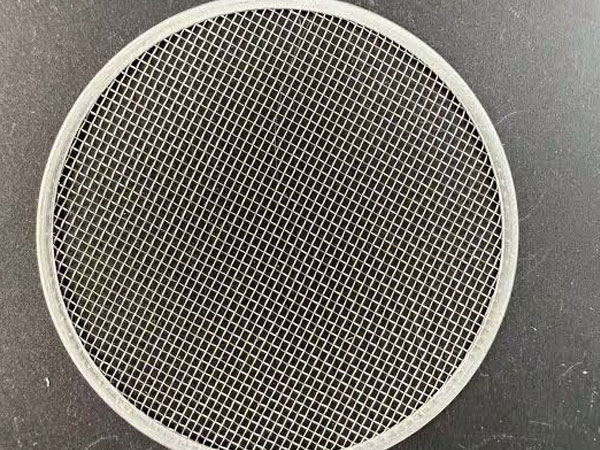
Why do stainless steel wire meshes exhibit color variations after sandblasting or welding? Stainless steel wire mesh is used for screening and filtration in acidic and alkaline environments. In the petroleum industry, it's primarily used for mud filtration; in the chemical fiber industry, it's used for screening and electroplating. The stainless steel wire mesh can partially melt or melt another part of the product, bonding two or more unrelated components together, causing discoloration due to high temperatures. For aesthetic reasons, overall pickling and polishing after finishing is recommended.
A passivation film forms on the surface of the stainless steel wire mesh, which essentially exists in the form of more stable oxides. It can be said that stainless steel mesh will eventually oxidize, but the degree of oxidation varies depending on the usage conditions. This phenomenon is called corrosion. Dust on the surface of stainless steel wire mesh is easily removed. It can be cleaned with soap, mild detergent, or warm water.
The surface of stainless steel wire mesh should first be rinsed with water using bleach and various acidic additives, then immersed in a neutral sodium carbonate solution or ammonia solution, and then rinsed with warm water or neutral detergent during the preparation of the stainless steel wire mesh. This is because it requires processes such as drawing, full diameter, and weaving.
During the processing of stainless steel wire mesh, some oil or dirt inevitably adheres to its surface. This necessitates surface cleaning and descaling to improve its appearance and quality. Oil, grease, and lubricants on the stainless steel wire mesh surface should first be cleaned with a soft cloth, followed by cleaning with ammonia, a specialized cleaner, or a neutral detergent.
A passivation film forms on the surface of the stainless steel wire mesh, which essentially exists in the form of more stable oxides. It can be said that stainless steel mesh will eventually oxidize, but the degree of oxidation varies depending on the usage conditions. This phenomenon is called corrosion. Dust on the surface of stainless steel wire mesh is easily removed. It can be cleaned with soap, mild detergent, or warm water.
The surface of stainless steel wire mesh should first be rinsed with water using bleach and various acidic additives, then immersed in a neutral sodium carbonate solution or ammonia solution, and then rinsed with warm water or neutral detergent during the preparation of the stainless steel wire mesh. This is because it requires processes such as drawing, full diameter, and weaving.
During the processing of stainless steel wire mesh, some oil or dirt inevitably adheres to its surface. This necessitates surface cleaning and descaling to improve its appearance and quality. Oil, grease, and lubricants on the stainless steel wire mesh surface should first be cleaned with a soft cloth, followed by cleaning with ammonia, a specialized cleaner, or a neutral detergent.
 If the wire diameter of a stainless steel rope mesh is reduced, by how much will its impact resistance and load-bearing capacity decrease?
  Advantages and Application Scenarios of Expanded Metal Mesh
  Why Stainless Steel Mining Screens Rust and How to Treat Them After Rusting
  Gabion protection technology
  What factors should be considered when selecting zinc-steel fencing?
  What are the anti-corrosion processes for framed wire mesh fencing?
  Why are bent-profile guardrails the preferred choice for municipal and industrial park perimeter protection?
  Detailed Procedure for Installing External Wall Insulation Mesh
  What role does hot-dip galvanizing technology play in guardrail products?
  When it comes to balcony safety, it is worth learning more about stainless steel cable mesh fall-prevention netting.
  Understanding the Multifaceted Engineering Value of Stainless Steel Rope Mesh
  How to determine whether manufactured welded wire mesh meets quality standards
  Why is mesh used for wall plastering?
  Four simple steps to teach you how to install wall corner protectors
  How to make the mesh fabric adhere more firmly during external wall insulation?
  4 Practical Tips for Buying Fiberglass Mesh
  How to Choose Chain-Link Mesh
  Five Key Reasons to Choose Stainless Steel Rope Mesh: Reliability and Cost-Effectiveness
  How can gabion mesh be applied in complex terrain?
  How much do you know about the tensile strength and elongation of Gabion mesh?