
Why is the steel grating deformed and how to solve it after deformation
2023-03-30
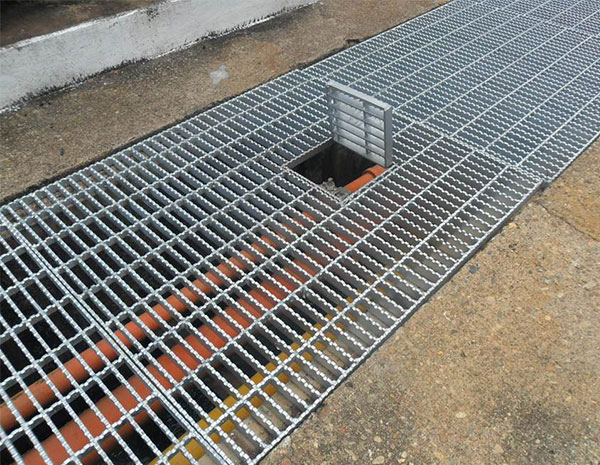
Influencing Factors of Welding Deformation of Steel Grating
1. Influence of input heat source on welding deformation
During the welding process of the steel grid plate, affected by the local high-temperature heat source, the weld zone is heated rapidly, and the steel grid plate is partially melted. The material in this area is heated to expand the welded area, and the relatively low temperature area around the steel grid constrains the welded area, resulting in elastic thermal stress. The yield stress limit of the material drops sharply after the temperature rises, resulting in thermoelastic stress Exceeding the yield limit, thermal compression is formed.
During cooling, the shrinkage of the material in the weld area is affected by the uneven temperature field in the surrounding area, resulting in uneven shrinkage deformation, the weld area presents tensile residual stress, and the adjacent area bears compressive residual stress. The welding of stainless steel grille is very sensitive to the input of heat source, and it is of great significance to reasonably control the energy of the input heat source for the quality of the weldment of the grille.
The input of larger heat source energy will cause larger shrinkage deformation, conversely, the input of smaller heat source energy will cause smaller shrinkage deformation. Therefore, in the case of ensuring that the weld seam is well formed, the input heat source should be selected as small as possible.
2. Influence of weld size on welding deformation
For stainless steel grating welding, the area size of the weld is closely related to the deflection deformation of the steel grating weldment. In addition, the position of the weld in the structure is also important for the welding deformation of the stainless steel grating. will have an impact. The asymmetric arrangement will lead to the bending deformation of the weldment. The closer the neutral axis of the weldment section of the steel grid plate is to the weld, the smaller the bending deformation is; on the contrary, the farther the neutral axis of the weldment section is from the weld, the relative The greater the bending deformation.
3. Influence of initial roughness and plate thickness of welding plate on welding deformation
However, it is impossible to produce ideal stainless steel plates in actual processing and production. Steel gratings may have different degrees of initial deflection or initial geometric defects. These initial surface roughness and defects will cause steel gratings to a certain extent. Critical buckling deformation of grid plate welding.
For the plate with unevenness problem, the increase of residual stress and the increase of plate deflection is relatively slow at the initial stage; but when the residual stress generated by welding exceeds a certain value, the instantaneous increase of plate deflection will be relatively fast. When the initial roughness of the steel grid plate is relatively large, the critical load value that the plate can bear will be reduced to a certain extent, and the instability deformation is easier to occur.
Therefore, the initial surface roughness of the stainless steel plate weldment must be strictly controlled, otherwise it will greatly affect the welding resistance against instability and deformation and critical load. In addition to the initial surface roughness, the thickness of the sheet is also an important factor affecting the buckling deformation. The smaller the thickness of the welded plate, the smaller its rigidity and the lower its ability to resist bending deformation. When the stainless steel plate is butt welded, it is more likely to be deflected due to the influence of a high temperature heat source. On the contrary, the greater the welding thickness, the greater the rigidity and less deformation.
1. Influence of input heat source on welding deformation
During the welding process of the steel grid plate, affected by the local high-temperature heat source, the weld zone is heated rapidly, and the steel grid plate is partially melted. The material in this area is heated to expand the welded area, and the relatively low temperature area around the steel grid constrains the welded area, resulting in elastic thermal stress. The yield stress limit of the material drops sharply after the temperature rises, resulting in thermoelastic stress Exceeding the yield limit, thermal compression is formed.
During cooling, the shrinkage of the material in the weld area is affected by the uneven temperature field in the surrounding area, resulting in uneven shrinkage deformation, the weld area presents tensile residual stress, and the adjacent area bears compressive residual stress. The welding of stainless steel grille is very sensitive to the input of heat source, and it is of great significance to reasonably control the energy of the input heat source for the quality of the weldment of the grille.
The input of larger heat source energy will cause larger shrinkage deformation, conversely, the input of smaller heat source energy will cause smaller shrinkage deformation. Therefore, in the case of ensuring that the weld seam is well formed, the input heat source should be selected as small as possible.
2. Influence of weld size on welding deformation
For stainless steel grating welding, the area size of the weld is closely related to the deflection deformation of the steel grating weldment. In addition, the position of the weld in the structure is also important for the welding deformation of the stainless steel grating. will have an impact. The asymmetric arrangement will lead to the bending deformation of the weldment. The closer the neutral axis of the weldment section of the steel grid plate is to the weld, the smaller the bending deformation is; on the contrary, the farther the neutral axis of the weldment section is from the weld, the relative The greater the bending deformation.
3. Influence of initial roughness and plate thickness of welding plate on welding deformation
However, it is impossible to produce ideal stainless steel plates in actual processing and production. Steel gratings may have different degrees of initial deflection or initial geometric defects. These initial surface roughness and defects will cause steel gratings to a certain extent. Critical buckling deformation of grid plate welding.
For the plate with unevenness problem, the increase of residual stress and the increase of plate deflection is relatively slow at the initial stage; but when the residual stress generated by welding exceeds a certain value, the instantaneous increase of plate deflection will be relatively fast. When the initial roughness of the steel grid plate is relatively large, the critical load value that the plate can bear will be reduced to a certain extent, and the instability deformation is easier to occur.
Therefore, the initial surface roughness of the stainless steel plate weldment must be strictly controlled, otherwise it will greatly affect the welding resistance against instability and deformation and critical load. In addition to the initial surface roughness, the thickness of the sheet is also an important factor affecting the buckling deformation. The smaller the thickness of the welded plate, the smaller its rigidity and the lower its ability to resist bending deformation. When the stainless steel plate is butt welded, it is more likely to be deflected due to the influence of a high temperature heat source. On the contrary, the greater the welding thickness, the greater the rigidity and less deformation.
So how should we deal with the deformation of the steel grating?
1. When the edge-wrapping plate of the steel grating is deformed due to bumping, it is recommended that we use a sledgehammer to hit it or use a wrench to correct the deformed place, and be careful not to use too much force;
2. When the diagonal deviation of the steel grating is large due to improper force, it is recommended that two people erect the steel grating so that one of the longer diagonal corners of the steel grating gently bumps against the ground repeatedly. Remember not to use too much force;
3. When the steel grating is bent and warped due to uneven stress for a long time during transportation, the steel grating should be placed on sleepers, bricks or other objects that are raised from the ground The tilted side is facing upwards, so that the most curved part is in contact with the protrusion. Two people stand at the two ends of the steel grating tilted up, and apply light force.
2. When the diagonal deviation of the steel grating is large due to improper force, it is recommended that two people erect the steel grating so that one of the longer diagonal corners of the steel grating gently bumps against the ground repeatedly. Remember not to use too much force;
3. When the steel grating is bent and warped due to uneven stress for a long time during transportation, the steel grating should be placed on sleepers, bricks or other objects that are raised from the ground The tilted side is facing upwards, so that the most curved part is in contact with the protrusion. Two people stand at the two ends of the steel grating tilted up, and apply light force.
 If the wire diameter of a stainless steel rope mesh is reduced, by how much will its impact resistance and load-bearing capacity decrease?
  Advantages and Application Scenarios of Expanded Metal Mesh
  Why Stainless Steel Mining Screens Rust and How to Treat Them After Rusting
  Gabion protection technology
  What factors should be considered when selecting zinc-steel fencing?
  What are the anti-corrosion processes for framed wire mesh fencing?
  Why are bent-profile guardrails the preferred choice for municipal and industrial park perimeter protection?
  Detailed Procedure for Installing External Wall Insulation Mesh
  What role does hot-dip galvanizing technology play in guardrail products?
  When it comes to balcony safety, it is worth learning more about stainless steel cable mesh fall-prevention netting.
  Understanding the Multifaceted Engineering Value of Stainless Steel Rope Mesh
  How to determine whether manufactured welded wire mesh meets quality standards
  Why is mesh used for wall plastering?
  Four simple steps to teach you how to install wall corner protectors
  How to make the mesh fabric adhere more firmly during external wall insulation?
  4 Practical Tips for Buying Fiberglass Mesh
  How to Choose Chain-Link Mesh
  Five Key Reasons to Choose Stainless Steel Rope Mesh: Reliability and Cost-Effectiveness
  How can gabion mesh be applied in complex terrain?
  How much do you know about the tensile strength and elongation of Gabion mesh?